Bitcoin Surges Past $91,000 as Geopolitical Crisis Tests Crypto's Safe Haven Status
Bitcoin tops $91,000 amid Venezuela military action, highlighting crypto's evolving role as a geopolitical hedge during international crises.
compare_and_contrast

Bitcoin Surges Past $91,000 as Geopolitical Crisis Tests Crypto's Safe Haven Status
In a dramatic display of cryptocurrency markets responding to global uncertainty, Bitcoin has surged above $91,000 as international tensions escalate in Venezuela. According to CoinDesk, the world's largest cryptocurrency saw significant gains alongside Ethereum and Dogecoin as markets reacted to major U.S. military developments involving the capture of Venezuelan President Nicolás Maduro.
This latest surge represents more than just another price milestone—it's potentially establishing Bitcoin as a legitimate geopolitical hedge during times of international crisis, a role traditionally reserved for gold and government bonds.
The Venezuela Crisis Catalyst
The current situation in Venezuela has created a perfect storm for cryptocurrency adoption and market volatility. As reported by CoinDesk, the U.S. military action and subsequent capture of President Maduro has sent shockwaves through traditional financial markets, while simultaneously driving investors toward digital assets.
Venezuela's economic turmoil over the past decade has already made it a testing ground for cryptocurrency adoption. With hyperinflation destroying the value of the Venezuelan bolívar, many citizens have turned to Bitcoin and other cryptocurrencies as stores of value and means of conducting international transactions. The current geopolitical crisis has only accelerated this trend.
Bitcoin's Evolution as a Geopolitical Hedge
Traditional Safe Haven Assets vs. Digital Alternatives
Historically, during times of geopolitical uncertainty, investors have flocked to traditional safe haven assets like gold, U.S. Treasury bonds, and the Swiss franc. However, Bitcoin's recent performance suggests that digital assets are beginning to compete for this status.
The cryptocurrency's decentralized nature makes it particularly attractive during international conflicts where traditional banking systems may be disrupted or where capital controls are imposed. Unlike gold, which requires physical storage and transportation, Bitcoin can be moved across borders instantly and held without the need for intermediaries.
Institutional Response to Crisis
The current market movement isn't just driven by retail investors. Institutional players are increasingly viewing Bitcoin as a portfolio diversifier during geopolitical stress. Major corporations and investment funds that have added Bitcoin to their balance sheets are likely seeing their positions validated by the current performance.
This institutional acceptance represents a significant shift from previous geopolitical crises, where cryptocurrency markets often moved independently of traditional safe haven flows. The correlation between international tension and Bitcoin prices suggests the asset is maturing into a recognized hedge against political instability.
Market Dynamics and Trading Patterns
Crypto Market Performance Across Assets
While Bitcoin leads the charge above $91,000, the broader cryptocurrency market is showing strength. Ethereum and Dogecoin's gains, as noted in the original CoinDesk report, indicate that the geopolitical premium is extending beyond just Bitcoin to encompass the broader digital asset ecosystem.
This broad-based rally suggests that investors are viewing cryptocurrencies as an asset class rather than individual speculative instruments. The rising tide is lifting multiple boats, indicating increased confidence in digital assets as portfolio hedges.
Volume and Volatility Analysis
Geopolitical events typically drive both volume and volatility in cryptocurrency markets. The current surge to $91,000 likely comes with increased trading activity as both institutional and retail investors reposition their portfolios in response to the Venezuela crisis.
High-volume rallies during geopolitical events tend to be more sustainable than those driven purely by speculation, as they reflect genuine demand for the asset's utility as a hedge rather than just momentum trading.
Venezuela's Unique Cryptocurrency Landscape
Economic Necessity Driving Adoption
Venezuela's hyperinflationary environment has created one of the world's most compelling use cases for cryptocurrency adoption. Citizens facing a collapsing national currency have embraced Bitcoin and other digital assets not as speculative investments, but as practical tools for preserving purchasing power.
The country's experience with cryptocurrency adoption provides valuable insights into how digital assets perform during extreme economic distress. The current geopolitical crisis adds another layer to this real-world testing ground.
Infrastructure and Access Challenges
Despite the economic incentives for cryptocurrency adoption, Venezuela faces significant infrastructure challenges. Internet connectivity issues and limited access to reliable electricity can hamper cryptocurrency usage. However, the urgent need for financial alternatives often drives innovation in overcoming these obstacles.
Implications for Digital Assets and Military Conflicts
Precedent-Setting Market Behavior
The current market response to the Venezuela crisis could establish important precedents for how cryptocurrency markets behave during military conflicts and international interventions. If Bitcoin continues to perform as a safe haven during this crisis, it could attract even more institutional adoption for geopolitical hedging purposes.
Regulatory Considerations
Military conflicts and international sanctions often involve complex regulatory considerations for financial assets. Cryptocurrencies' borderless nature and resistance to traditional controls make them both attractive to users seeking financial freedom and concerning to governments seeking to implement economic sanctions.
The current situation may prompt new regulatory discussions about how digital assets should be treated during international conflicts and whether additional controls or monitoring measures are necessary.
Global Financial System Evolution
Shifting Reserve Asset Dynamics
As Bitcoin gains acceptance as a geopolitical hedge, it could begin to challenge the traditional hierarchy of reserve assets. While it's unlikely to replace gold or U.S. dollars in the near term, Bitcoin's inclusion in the conversation represents a significant evolution in global finance.
Central banks and sovereign wealth funds are already exploring digital asset allocations, and successful performance during geopolitical crises could accelerate this trend.
Decentralized Finance During Conflicts
The current crisis highlights the potential advantages of decentralized financial systems during international conflicts. Traditional banking systems can be disrupted by sanctions, military action, or infrastructure damage, while blockchain-based systems can continue operating as long as internet connectivity exists.
Looking Ahead: What to Watch
As the Venezuela situation continues to unfold, several key indicators will help determine whether Bitcoin's safe haven status is solidifying:
Market Sustainability: Whether Bitcoin can maintain elevated levels after the immediate crisis passes will indicate genuine safe haven adoption versus temporary speculation.
Institutional Flows: Monitoring whether major institutions are actually allocating more capital to Bitcoin during this period will provide insight into professional investment strategies.
Correlation Analysis: Tracking how Bitcoin's price movements correlate with traditional safe haven assets during the crisis will help establish its position in the hedge asset hierarchy.
Regulatory Responses: Government and central bank reactions to increased cryptocurrency usage during geopolitical crises could shape future adoption patterns.
Infrastructure Resilience: How well cryptocurrency networks perform under the stress of increased usage during the crisis will test their viability as financial infrastructure alternatives.
The current surge past $91,000 represents more than just another Bitcoin milestone—it's potentially a watershed moment for cryptocurrency's role in global finance. As traditional geopolitical tensions increasingly drive investors toward digital assets, we may be witnessing the emergence of a new paradigm in crisis-driven investing.
The Venezuela situation provides a real-world laboratory for testing these theories, and the results could influence cryptocurrency adoption strategies for years to come. Whether Bitcoin can maintain its safe haven premium beyond this immediate crisis will ultimately determine if digital assets have truly earned their place alongside gold and government bonds in the pantheon of geopolitical hedges.
Sources
Sources
Tags
Related Articles
Bitcoin Nears $100K, CME Volatility Futures Set for June, and Tokenized Markets Cross $9B
Bitcoin Charges Toward $100K as Spot ETF Inflows Hit 2026 Peak

CME Group Targets June 1 for Bitcoin Volatility Futures — A Regulated Market First

Franklin Templeton Marks 5 Years of BENJI as Tokenized Money Markets Brace for GENIUS Act Era

Bitcoin Breaks $82K, CLARITY Act Markup Scheduled, and Western Union Goes On-Chain

Bitcoin Climbs to Three-Month High Above $82,000 on ETF Inflows and Iran De-Escalation

CLARITY Act Markup Set for Week of May 11 After Senators Broker Stablecoin Yield Deal

Western Union Brings 175-Year-Old Payments Brand to Solana With New USDPT Stablecoin

Bitcoin Knocks on $80K, ETFs Post Strongest May Open, Corporate Treasuries at Record
Solana DEX Volume Tops Ethereum for Third Straight Week as Drift Contagion Claims First Victim

Corporate Bitcoin Treasuries Hit Record 1.19M BTC as Alberta
Bitcoin ETFs Kick Off May With $630M Single-Day Inflow — Strongest of 2026
Bitcoin Retreats Below $77K, ETF Streak Snaps, and CLARITY Act Stalls
FDIC Finalizes GENIUS Act Stablecoin Rules: 1:1 Reserves, Monthly Audits, 40% Cap
Bitcoin ETFs Snap Nine-Day Inflow Streak With $263M Outflows as BTC Retreats Below $77K

CLARITY Act Hits Senate Wall as July Deadline Looms for U.S. Crypto Law
Bitcoin Near $80K, Kelp DAO $292M Hack, and GENIUS Act Stablecoin Rules Advance
Bitcoin Approaches $80,000 as April ETF Inflows Hit $2.1 Billion Over Eight Days

FDIC and Treasury Propose Landmark Rules to Implement the GENIUS Act Stablecoin Framework
Kelp DAO Bridge Exploit Drains $292 Million and Wipes $14 Billion From DeFi TVL
Strategy Tops BlackRock, NY AG Sues Coinbase and Gemini, Bitcoin Core v31.0 Drops

Bitcoin Core v31.0 Overhauls Mempool Logic and Adds Tor-Only Transaction Broadcasting

New York AG Sues Coinbase and Gemini, Calling Prediction Markets Illegal Gambling
Strategy Overtakes BlackRock to Become World's Largest Bitcoin Holder With 815,061 BTC
Kelp DAO $292M Hack, Bitcoin ETFs Hit $53B, and CLARITY Act Senate Clock
Bitcoin ETFs Cross $53B in Cumulative Inflows as Morgan Stanley Debuts MSBT

CLARITY Act Faces Make-or-Break Senate Markup — US Crypto Law Now or 2030
Kelp DAO Hit for $292M in 2026's Biggest DeFi Exploit — Nine Protocols Freeze

Deutsche Börse Buys Kraken, SEC CLARITY Roundtable, and ARB Unlock Day

92.6 Million ARB Tokens Unlock Today — What It Means for Arbitrum Price and DeFi

SEC Hosts CLARITY Act Roundtable Today as US Crypto Regulation Reaches a Turning Point

Deutsche Börse Takes $200M Stake in Kraken Ahead of Crypto Exchange IPO

Iran Demands Bitcoin for Oil Tankers, EF Sells ETH, and Polymarket Launches Its Own Stablecoin

Polymarket Overhauls Its Entire Exchange — New Trading Engine, Smart Contracts, and Its Own Stablecoin

Ethereum Foundation Converts 5,000 ETH to Stablecoins via CoWSwap — Here Is Why That Is Actually Fine

Iran Demands Bitcoin and Crypto — Not Dollars — From Oil Tankers Crossing the Strait of Hormuz

Schwab Goes Crypto, Fannie Mae Backs Bitcoin Mortgages, and Ethereum Counts Down to Glamsterdam

Ethereum Glamsterdam Upgrade Targets June 2026 — 78% Fee Cut, 10,000 TPS Goal, and Institutional Accumulation

Fannie Mae Accepts Crypto-Backed Mortgages — Coinbase Partners With Better Home to Let You Buy a House With Bitcoin

Charles Schwab Launches Schwab Crypto — A $12 Trillion Giant Enters Spot Bitcoin and Ethereum Trading

Bitcoin Hits $68.7K, SEC-CFTC Unite, and Ethena Unlocks 40M Tokens

Bitcoin Surges Past $68K as Trump Signals Iran War Winding Down

Ethena Releases 40M ENA Tokens as Stablecoin Market Eyes Q2 Expansion

SEC and CFTC Unite on "Project Crypto" — Joint Oversight Framework for Digital Assets
BNP Paribas Goes Crypto, SEC/CFTC Drop the Rulebook, and BTC Holds Steady at $66.5K
Bitcoin Holds $66K as Fear & Greed Hits 9 — Are Institutions Quietly Buying the Fear?

SEC and CFTC Jointly Classify 16 Crypto Tokens as Commodities — Including ETH, SOL, and XRP

BNP Paribas Launches Six Crypto ETNs and Pilots Tokenized Money Market Fund on Ethereum
JPMorgan Goes All-In on Crypto Collateral, Bhutan Sells, and the CLARITY Act Advances

US CLARITY Act Clears Key Hurdle as Senators Strike Stablecoin Yield Deal
Bhutan's Sovereign Bitcoin Sell-Off Tops $152M in 2026 as Nation Funds Mega-City

JPMorgan Now Accepts Bitcoin and Ethereum as Institutional Collateral

Morgan Stanley MSBT Filing, Australia Crypto Licensing, and Tokenized Treasuries Take the Lead
Bitcoin ETF Inflows Stall in March as Tokenized Treasury Products Capture Institutional Billions

Australia Senate Committee Backs Digital Assets Licensing Bill — Crypto Platforms Face AFSL Regime
Morgan Stanley Files Amended Bitcoin ETF Under MSBT Ticker — A First for Major U.S. Banks
Kraken Freezes IPO, SEC Unveils Token Safe Harbor, FTX Pays $2.2B
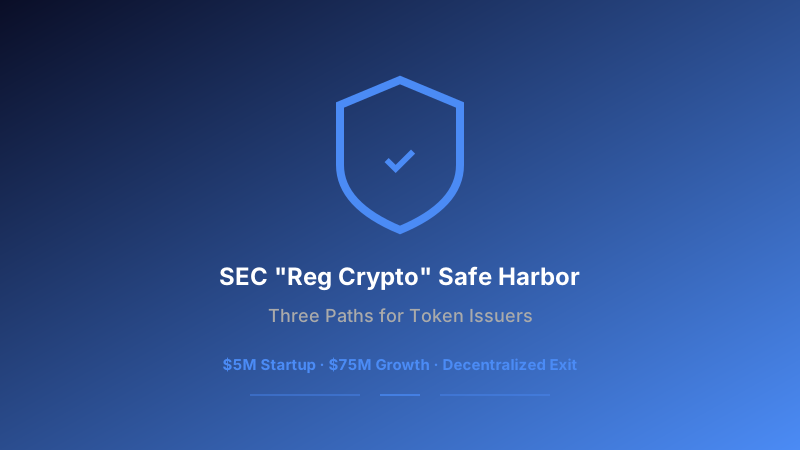
SEC Chair Atkins Unveils "Reg Crypto" Token Safe Harbor Framework
FTX to Distribute $2.2 Billion to Creditors in Fourth Payout
Kraken Freezes IPO Plans as Crypto Markets Slump
BTC hits $75K as XRP flips BNB, $767M ETF inflows

AI Crypto Tokens Surge After Nvidia CEO's $1T Chip Forecast

XRP Price Surge Flips BNB: $93B Market Cap Milestone

Bitcoin Price Plunges Below $75K as Rally Unravels
ETH surges 10%, BTC hits $74K as $1B flows in

Institutions Hold Bitcoin Through 50% Crash: Diamond Hands

Circle Stock Surges 100%: USDC Stablecoin Drives Rally

Ethereum Foundation Mandate Sparks Heated Governance Debate

Crypto Phishing Scams Targeted by Global Operation Atlantic
Metaplanet Bitcoin: $255M Raise Sets New Treasury Standard

MicroStrategy Adds $1.57B Bitcoin: 3.5% Supply Ownership

SEC CFTC Cooperation: New Era for Crypto Regulation 2026
BTC eyes $72K as whales buy, Nasdaq puts $126T on...

Venus Protocol Hit by $3.7M Oracle Manipulation Attack

AI Prediction Markets: How Bots Are Changing Trading

AI Agents Payments: Visa vs Coinbase Battle for Future
CLARITY Act 2026: April Deadline Looms for Crypto Regulation

Fed Master Account Crypto: Custodia Loses, Kraken Wins

Bitcoin Safe Haven: From War Selloff to Market Leader
USDC vs USDT: Circle Closes Gap on Tether's Market Lead

Bitcoin Mining Hits 20M Coins: Why Most Miners Won't Last

Ethereum Foundation Sells 5,000 ETH to Tom Lee's BitMine
Custodia Bank Loses Fed Appeal: Crypto Banking Setback

Crypto Tax Rules 2026: IRS Changes Create Compliance Maze

USDC Market Cap Hits $80B as UAE Capital Flight Accelerates
BTC holds $71K despite Iran strikes, ETFs hit 5-day...
XRP Price Drops 26% Despite Record Network Activity

Circle USYC Overtakes BlackRock in $11B Treasury Token Boom
Bitcoin Infrastructure Survives 72% Cable Cuts, Study Finds
BTC hits $72k outperforming gold, TRUMP soars 50%
Treasury Sanctions 6 for $800M North Korea Crypto Scheme
USDC Overtakes USDT Volume for First Time Since 2019

Ethereum Foundation Mandate: New Governance Era Begins
BlackRock ETHB ETF: 82% Staking Rewards Change Everything

Bitcoin Geopolitical Stress Test: BTC Spikes Above $72K
SEC Backs Tokenized Securities: Regulatory Framework Set
DeFi Trading Mistakes: $50M Lost to Slippage in Single Trade
BTC holds $70K as oil hits $100, AI jobs surge

Bitcoin Mining Costs: $100 Oil Impact Less Than Expected

Vitalik Buterin: Ethereum Should Be Digital Bulletin Board

SEC CFTC Agreement Ends Years of Crypto Regulatory Chaos

Bitcoin Safe Haven: BTC Holds $70K as Stocks Tumble
CBDC Ban Passes Senate: Digital Dollar Future at Risk

Bitcoin Futures Trading Now 5x Bigger Than Spot on Binance

Ethereum Ultrasound Money Failed: ETH Down 65% vs BTC
SEC CFTC Crypto Agreement: End of Regulatory Chaos?

BlackRock Ethereum ETF Launches: ETHB Offers Staking Yields
Wells Fargo files WFUSD crypto trademark, Binance sues...
FDIC Blocks Stablecoin Deposit Insurance Under GENIUS Rules
Wells Fargo WFUSD: Bank Joins Stablecoin Race Against Circle
ECB Tokenized Finance Plan Challenges DeFi's Future
Wells Fargo WFUSD: Major Bank Eyes Stablecoin Market Entry

Mastercard Partners with Binance, PayPal & Ripple for Crypto

Binance DOJ Investigation: Iran Sanctions Compliance Crisis
BTC hits $71K as crypto hacks drop 88%

SEC CFTC Cooperation: New Era for Crypto Regulatory Clarity

Polymarket Palantir: AI Surveillance Enters Crypto Betting
Crypto Clarity Act Compromise: Stablecoin Yield Concessions
Bitcoin Supply Cap: 95% Mined, Security Questions Emerge

Bitcoin BIP-360: New Quantum Defense Falls Short
Tornado Cash Retrial: DeFi Developer Liability at Stake
Solana ETF Draws $540M Wall Street Inflows in Q4 Surge

Bhutan Bitcoin Sales: Kingdom Dumps $42.5M, Stack Down 58%

AI Tokens Surge 40% on Nvidia Open-Source Agent News
Zcash Raises $25M from Paradigm, a16z for Privacy Tech
Strategy Buys $1.28B Bitcoin, Expands Treasury to 738K BTC
Bitcoin 20 Million: Only 1M BTC Left to Mine Over 114 Years

Bitcoin Safe Haven: Outperforms Gold During Crisis

Nasdaq Kraken Partnership: Tokenized Stocks Go Global
Crypto Mixers: Treasury Signals Policy Shift on Privacy
BTC drops below $70K, 43% supply underwater
Crypto Freeze Powers: Treasury Seeks New Compliance Rules

Tokenized Oil Trading: $40M Liquidations Rock Hyperliquid
Bitcoin Safe Haven: $67K Hold Amid Oil Surge & War Fears

Bitcoin ETF Flows Surge as Gold ETF Sees Major Outflows

Bitcoin Mining Cost: Miners Need $74K+ Just for Power Bills

IRS Crypto Tax Forms: New 1099-DA Rules Could Lock You Out

SEC Crypto Enforcement Fades as Trump Era Reshapes Policy

Bitcoin Network Survives Major Internet Cable Cut Test
Kalshi Valuation Hits $20B Despite Regulatory Storm

Latin America Crypto Growth Outpaces US 3x in 2025

Prediction Markets: Wall Street's New Risk Hedging Tool
Jack Dorsey caves to stablecoins, BTC slips to $68K

Kalshi Valuation Hits $20B: Prediction Market Boom

USDC Volume Surge: Circle Overtakes Tether in $1.8T Record

Jack Dorsey Bitcoin Stance Cracks Under Stablecoin Pressure
BTC drops to $70K as ETFs shed $228M | Crypto Briefing Mar 6
Kazakhstan Central Bank Plans $350M Crypto Investment Push

KuCoin Dubai Ban: VARA Orders Exchange to Halt Operations
Strike BitLicense: NY Opens Door to Bitcoin Payments
US Marshals Crypto Theft: $46M Seized Assets Stolen

NYSE Tokenized Stocks Coming to OKX as ICE Invests at $25B
Crypto Sanctions Evasion Surges 700% in 2025: Chainalysis
Bitcoin ETF Inflows Hit $462M as BTC Touches $73K Peak
a16z Seeks $2B for Fifth Crypto Fund: VC Giant Doubles Down

NYSE Owner ICE Invests in OKX at $25B Valuation
Trump Backs Crypto in $180B Stablecoin Yield War
Kraken Federal Reserve Access: Crypto Banking Breakthrough
Bitcoin ETF Inflows Drive $72K Rally Despite Demand Warnings
BTC surges to $74K, $1.7B ETF inflows
A16z Targets $2B for Fifth Crypto Fund Despite Market Chill
Kraken Federal Reserve Access: Crypto Banking Breakthrough
BTC surges to $73K, Kraken gets Fed approval
Trump Crypto Bill Push: Clarity Act Faces Congressional Test
Kraken Fed Account: First Crypto Firm Breaks Banking Barrier

Ethereum AI: Foundation Eyes Trust Layer for AI Future
Bitcoin Safe Haven: $72K High Amid Middle East Crisis
Morgan Stanley Bitcoin ETF: Coinbase & BNY Custody Pick

Kraken Secures First Fed Master Account for Crypto
Aave governance crisis, ETH supply crunch

Visa Stablecoin Cards Expand to 100+ Countries with Stripe
Aave Governance Crisis: Major Group Exits $26B DeFi Protocol
FATF Warns: Stablecoins Now Dominate Crypto Crime

Bitcoin Miner AI Pivot: Core Scientific Sells $175M BTC
Tether Deloitte Audit: Big Four Firm Reviews USAT Reserves
Uniswap Lawsuit Dismissed: DeFi Legal Shield Strengthened
NEAR Confidential Intents Launch Drives 17% Token Surge
CBDC Ban Hidden in Senate Housing Bill Signals Policy Shift
Bitcoin ETF Inflows Surge $458M Amid Iran Crisis Volatility
Bitcoin Safe Haven: $68K Surge Amid Iran Conflict

BIP-110 Sparks Bitcoin's Biggest Governance Battle Yet
Vitalik Buterin Tackles Ethereum Block Builder Crisis

Bitcoin Geopolitical Hedge: Iran Crisis Tests Safe Haven
Crypto ETP Inflows Hit $1B: End of 5-Week Selloff?

Bitcoin ETF Outflows Hit $9B: Institutional Crypto Exodus
$9B flees crypto ETFs, BTC holds $66K
Ethereum Execution Layer Overhaul: Vitalik's Bold Roadmap

Bitcoin Iran Conflict: Crypto Falls as Oil Spikes 6%
Bitcoin Hard Fork Proposed to Recover $5.2B Mt. Gox Funds
Bitcoin ETF Reversal: $3.8B Outflows Turn Positive Overnight

Polymarket Insider Trading: $1M Profit Before Iran Strikes
Morgan Stanley Files for Crypto Bank Charter

SpaceX Bitcoin Holdings Drop $235M Before Historic IPO
BTC drops to $63K as US strikes Iran, $100M liquidated
Citi Bitcoin Custody & Morgan Stanley Crypto Trading Expand
BTC stalls at $68K, insider trading probes surge

Axiom Insider Trading: ZachXBT Exposes Employee Misconduct

AI Rout Sparks Blockchain Integration Opportunity

Ethereum Quantum Computing: Vitalik's Defense Roadmap
GENIUS Act Stablecoins: OCC Unveils Banking Framework

Bitcoin ETF Inflows Hit $506M: Institutional Buying Returns

Ethereum Roadmap 2029: Seven Forks to Transform Blockchain

Tether Investment: $200M Whop Deal Signals Payment Push

Ethereum Roadmap 2026: Vitalik's Quantum-Proof Plan
Uniswap Fee Switch Vote Sparks 15% UNI Rally
Stablecoins surge as Stripe hits $159B, Meta revives...
Vitalik Buterin Sold 17,000 ETH as Price Crashed 37%
Circle Earnings Beat Estimates: USDC Stock Jumps 15%
Binance Sanctions: Senator Probes $1.7B Iran Flow

Meta Stablecoin Return: Facebook's 2026 Crypto Comeback Plan

WisdomTree Gets SEC Nod for 24/7 Tokenized Fund Trading
Fed Scraps 'Reputation Risk' to End Crypto Debanking Crisis
BTC drops to $62.8K as tariffs trigger crypto selloff

Bitcoin Mining AI Pivot: Bitdeer Sells All BTC Holdings
Stablecoins Could Drive $1T Treasury Bill Demand by 2028

Operation Chokepoint 2.0 May End as Fed Seeks Public Input

ZachXBT Investigation Sparks $3M Polymarket Betting Frenzy

BlackRock Bitcoin ETF Sees $436M Hong Kong Investment

Crypto.com Bank Charter: OCC Approval Reshapes Industry
BTC drops to $64K, $4B exits ETPs | Crypto Briefing Feb 23
Stablecoins Could Drive $1T T-Bill Demand by 2028
Crypto ETF Outflows Hit 5-Week Streak: $4B Exit Signal
Bitcoin Quantum Threat: $440B in Early Coins at Risk

Bitcoin ETF Outflows Hit $3.8B in Historic Five-Week Streak
$61M Bitcoin Whale Liquidated as Fear Returns to Crypto

AI Trading Bot Error Costs $450K in Memecoin Mishap

Vitalik Buterin AI Governance: Revolutionary DAO Voting

Cardano ETF Fast-Track: ADA Gets 75-Day SEC Shortcut

Decentralized AI Projects Challenge Big Tech's Dominance

Quantum Computing Bitcoin Threat: $440B at Risk

Bitcoin ETF Outflows Hit 5-Week Streak: What's Next?

Bitdeer Bitcoin Sale: Miner Dumps Entire Treasury to Zero

Crypto Capital Rotation: Why 80% of New Tokens Are Failing
Yen surge triggers BTC selloff, ETFs hit 5-week outflow

Ethereum Censorship Resistance: Vitalik's Bold Upgrade
Russia Sanctions Crypto: 5 Exchanges Fill Garantex Void
Supreme Court Bitcoin Impact: $175B Tariff Refunds Ahead
ETF outflows hit 5 weeks, 'Bitcoin to zero' searches...

Iran Bitcoin Adoption Surges as Rial Collapses 40% in 2026
SBI Issues ¥10B Onchain Bonds with XRP Rewards

Vitalik Buterin's AI DAO Plan Could Fix Web3 Democracy

Christine Lagarde ECB Exit: What's Next for European Crypto?
SEC Stablecoin Guidance: 2% Haircut Rule Changes Everything
Supreme Court Crypto: Trump Tariff Ruling Shakes Markets

Dubai Real Estate Tokenization Hits $16B Milestone

AI Detects 92% of DeFi Exploits: Security Breakthrough

Netherlands bans Polymarket, BTC worst 50-day start ever
Bitcoin Backed Loans Hit Wall Street With $188M Deal

Bitcoin ETF Outflows Hit $4B: Institutional Exodus Explained

CLARITY Act Has 90% Chance to Pass by April: Garlinghouse
Bitcoin Worst Start Ever: Historic 50-Day Decline Analysis

White House Backs Limited Stablecoin Rewards for Banks

Bitcoin Difficulty Jumps 15%: Largest Increase Since 2021

UAE Bitcoin Mining Generates $344M Sovereign Crypto Profits

Neel Kashkari Calls Crypto 'Utterly Useless' in Fed Attack

Blockfills Sale After $75M Loss Exposes Crypto Trading Risks

Polymarket Lawsuit Could Reshape US Prediction Market Rules

Bitcoin Backed Bonds: Ledn's $188M Deal Changes Everything
Stablecoin Volume 2025: $35T Milestone Signals Mainstream
BTC eyes fifth weekly drop, $40K puts surge

CLARITY Act Could Pass by April: What It Means for Crypto

Coinbase Lending Expands to XRP, ADA, DOGE Holders
Bitcoin Options: $40K Put Becomes Massive Hedge Bet
WLFI Stablecoin Gets $3.5T Giant Apex Group Pilot Deal
Ethereum Staking Ratio Dispute: Is 50% Real or Misleading?

Base Ditches OP Stack: Major L2 Infrastructure Shift
DAO hack ETH becomes $150M security fund
Bridge Banking Charter: Stripe's Crypto Banking Breakthrough

Peter Thiel ETHZilla Exit Signals Crypto Treasury Trouble

Moonwell Oracle Exploit: $1.8M Lost in cbETH Price Glitch
Dragonfly Raises $650M Fund Amid Crypto VC Winter

South Korea Lifts 9-Year Corporate Crypto Ban: Game Changer

BlackRock Starts Buying ETH for Staking ETF Launch
BTC pinned below $70K, negative funding flashes warning
CFTC Chair Defends Federal Authority Over Prediction Markets

Dragonfly Capital Fund Raises $650M Despite VC Shakeout

South Korea Ends 9-Year Corporate Crypto Ban: Global Impact

Stablecoins Become Everyday Money for 39% of Users
Steak n Shake Bitcoin Payments Drive 'Dramatic' Sales Growth

Ethereum RWA Market Explodes 315% to $17B in 2024

Intesa Sanpaolo Bitcoin: $100M ETF Holdings Signal Shift
Crypto Fear Greed Index Hits 4-Year Low: Market Bottom?

Polygon Flips Ethereum Fees as Prediction Markets Boom
Bitcoin Surges as Dollar Bearish Bets Hit 12-Year High
BTC hits $70K then crashes, Harvard cuts stake 21%
Tokenized RWAs Surge 13.5% as $1T Crypto Market Crashes

Nexo Returns to US Market via Bakkt Partnership
Bitcoin $10000: McGlone Warns of Crash Amid Recession Risk

Harvard Bitcoin ETF Cut 20%: Institutional Crypto Shift

Ethereum Whale Dump: $540M Sell-Off Tests Market Strength

Animoca Brands Dubai License: VARA Approval Signals Shift

Metaplanet Bitcoin Strategy Drives 1,700% Profit Surge
Bitcoin Q1 2026: Down 22%, Worst Quarter Since 2018

Russia Crypto Volume Hits $129B Yearly Amid Sanctions Push

Apollo's $900B Fund Enters DeFi with Morpho Partnership

CFIUS Crypto Investigation: UAE's $500M Trump Project Stake
Bitcoin Short Squeeze Triggers $736M Liquidation Event

Prediction Markets Insider Trading: Blockchain Defense

Bitcoin Quantum Computing: Developers Prep Defense Strategy

BlackRock Bitcoin Warning: Leverage Threatens Adoption
Wall Street bullish on BTC while offshore retreats

Trump Crypto ETF: Truth Social Files Bitcoin Staking Fund

Mirae Asset Buys 92% of Korbit for $93M: TradFi Goes Crypto

Bitcoin Futures Basis Reveals Wall Street vs Retail Split

X Trading Feature Launch Just Weeks Away, Says Executive

Bitcoin Quantum Computing: Institutional Pressure Mounts

Trump Crypto Company Faces UAE Investment Probe Demand

Bitcoin Bear Market: Why the Bottom May Still Be Ahead

Sui Blockchain Sees Record Institutional Demand Post-Act

X Crypto Trading Launches Soon: Musk's Bold Financial Move
BTC bounces 6% to $70K on soft CPI, $8.7B wiped

Netherlands Crypto Tax: 36% Rate Threatens European Markets

Figure Technology Hack Exposes Critical Crypto Security Gaps

Trump Media Files Bitcoin, Ethereum, Cronos ETFs with SEC

CFTC Crypto Committee: 35-Seat Panel Shifts SEC Battle
Stablecoin Yield Ban: Crypto Industry Fights Wall Street
Trump Crypto ETF: Truth Social Files SEC Application
DeFi Regulation: UK FCA Faces Push for Control-Based Rules

Coinbase Earnings Miss Sparks Analyst Cuts, Yet COIN Rallies

Ethereum Foundation Leadership Shake-Up: Stańczak Steps Down
BTC slides below $66K, ETFs bleed $410M

Seoul Police Lose $1.5M Bitcoin: Custody Crisis Exposed
Binance Reserves Drop $40B Despite Rising Bitcoin Holdings

Bitcoin Mining Difficulty Plunges 11% in Historic Drop
BTC drops below $66K as StanChart warns $50K

Solana 2026: From FTX Collapse to DeFi Powerhouse Revival

Bitcoin Price Prediction: Standard Chartered Sees $50K Drop
Crypto Regulation Breakthrough: Key Democrat Backs Bill

BlackRock BUIDL Hits Uniswap: DeFi Meets Wall Street

UK Appoints HSBC for Tokenized Bonds Pilot Program

Binance Bitcoin: Exchange Converts $1B SAFU Fund to BTC

Gen Z Crypto Trading Boom: $100T Market Fueled by Nihilism
BlockFills Halts Withdrawals: Institutional Crypto Crisis

BlackRock DeFi: Asset Giant Brings $2.1B Fund to Uniswap
SEC Crypto Enforcement: Atkins Faces Congressional Heat
BlockFills Halts Withdrawals: CME-Backed Lender Crisis

BlackRock DeFi Entry: BUIDL Fund Hits Uniswap
BTC slides below $67K as Hong Kong approves perps

Tokenized Money Funds as Crypto Collateral: Game Changer

Digital Euro Gains European Parliament Support: CBDC Reality

Hong Kong Crypto Regulation: SFC Approves Margin Trading
Bank of England taps Chainlink for DLT pilot

Bank of England Chainlink Pilot Tests Blockchain Settlement

Tether LayerZero Investment: USDT's Cross-Chain Future

Vitalik Buterin AI: Ethereum's Role in Decentralized AGI
BitMine Buys 40,613 ETH During Market Crash Despite Losses

MegaETH Mainnet Launches: 50K TPS Ethereum Scaling Milestone
Bernstein Keeps $150K Bitcoin Target Despite Market Crash

BitMine Buys More Ethereum Despite $7.5B Unrealized Loss

MegaETH Mainnet Launches With 50K TPS Real-Time Claims
Bitcoin $150K by 2026: Bernstein Stays Bullish Amid Crash
BTC whales buy 40K coins at $60K dip, Binance adds $300M

Tether Gold Reserves Hit $23B, Surpassing Many Nations

Bitcoin Mining Difficulty Drops Most Since 2021 Amid Crisis

Crypto.com CEO Buys ai.com for Record $70M in AI Pivot
Bithumb Error: $44B Bitcoin Accidentally Sent to Users
Block Layoffs Signal Deeper Crypto Winter Employment Crisis

Bitcoin Capitulation Signs: Bulls Hunt for Bottom at $60K
Block cuts 10% workforce, BTC fights for $71K

Tether USAT Launch: New US Stablecoin Changes Game

Bitcoin ETF Flows May Be Masking Major Crash Signals

South Korea Jails Crypto CEO Under New Virtual Asset Law
Bithumb's $40B Bitcoin Error: Exchange Security Crisis
Vietnam Crypto Tax: 0.1% Trading Levy Proposed Like Stocks
Tether Freezes $544M in Turkey Crypto Seizure Operation
ETH crashes below $2K, $686M firm loss
Crypto 401k Under Fire After $2T Market Crash
BlackRock IBIT Options Hit Record as Crypto Crashes
Ethereum Crash Below $2K Triggers $686M Trading Loss
Bitcoin crashes to $60K, $2.6B liquidated as crypto sentiment hits 3.5-year low | Crypto Briefing Feb 6

ARK Invest's $35M Crypto Exchange Swap: Why Cathie Wood Chose Bullish Over Coinbase

Bitcoin Crash to $60,000: Dissecting the Hidden Forces Behind the Market Meltdown
Corporate Bitcoin Treasury Crisis: $10B in Losses Expose Flawed Risk Management

BlackRock Bitcoin ETF Hits $10B Volume Record: Is This Peak Institutional Capitulation?

Bitcoin Crash to $60K Triggers $2.6B Liquidation Cascade: Market Recovery or Deeper Shift?

Crypto Fear & Greed Index Plunges to 9: Are We Seeing the Next Market Bottom?
BTC crashes below $67K, $1.3B liquidated | Crypto Briefing Feb 5

Bhutan's Bitcoin Strategy Shift: Why the Carbon-Negative Nation is Moving BTC During Market Volatility

Bitcoin Crash Below $70K Triggers $1B Liquidation Cascade: Market Structure Under Stress

Bitcoin Crashes Below $70,000: Technical Breakdown Analysis and Recovery Outlook
Bitcoin Crash 2026: $67K Drop Triggers $1.4B Liquidation Cascade as ETF Outflows Mount
Gemini Exchange Exit Signals Major Crypto Industry Retreat From International Markets

WLFI Under Fire: House Probe Examines Trump Crypto Venture's $500M UAE Ties

Bitcoin Mining Crisis: Why $70K Bitcoin Can't Cover $87K Production Costs
Treasury Secretary Bessent Targets Crypto 'Nihilists' in Push for Market Structure Bill

Vitalik Buterin Calls Out 'Copy-Paste' Ethereum L2 Chains: The Innovation Crisis in Layer 2 Scaling
BTC hits 15-month low at $72K, $800M liquidated | Crypto Briefing Feb 4

Bitcoin Mining Crisis: 14% Difficulty Drop Signals Fundamental Security Shift
Fidelity Launches FIDD Stablecoin: How a $4.5T Giant Could Reshape the Stablecoin Wars

Ethereum Layer 2 Networks Face Identity Crisis as Vitalik Buterin Abandons 'Branded Shards' Vision

Bitcoin Price Crash: BTC Hits 15-Month Low as Market Faces Reality Check
Treasury Secretary Bessent Declares US Won't Bail Out Bitcoin Amid Congressional Grilling
CME Coin: Wall Street's Derivatives Giant Joins the Tokenization Revolution
BTC rebounds to $78K after weekend crash, TeraWulf surges 11% | Crypto Briefing Feb 3

DeFi TVL Shows Remarkable Resilience as Bitcoin Price Decline Tests Market Stability

Tether MiningOS: How Open-Source Software Could Revolutionize Bitcoin Mining Operations

SpaceX xAI Merger Creates $1.25T Giant: How Space AI Infrastructure Could Transform Cryptocurrency

Why Ethereum Network Activity Defies ETH Price Decline: A Deep Dive into Blockchain Fundamentals
ING Deutschland Launches Direct Crypto Trading: A Watershed Moment for European Banking
Trump Crypto Project Faces Scrutiny Over $500M UAE Investment Amid Regulatory Concerns
BTC crashes to $74K, $2.5B liquidated as wrench attacks hit $41M | Crypto Briefing Feb 2

Binance Makes Bold Move: $100M Bitcoin Purchase Signals Massive SAFU Fund Strategy Shift
Binance's $1 Billion Bitcoin Treasury Strategy: What This Historic SAFU Fund Conversion Means for Markets

Bitcoin Correlation Crisis: Why Crypto Diversification Still Fails in 2026

Crypto ETF Outflows Hit $1.7B as Institutional Sentiment Shifts: What's Behind the Retreat?
Crypto Security Crisis: $370M Stolen in January 2026 Signals Alarming Trend
Hong Kong Stablecoin License Program Launches March 2026: A Game-Changer for Asian Crypto Markets

Trump Crypto Investment Raises Foreign Policy Questions as UAE Sheikh Acquires Major Stake

Bitcoin Weekend Selloff Exposes $290 Billion Crypto Liquidity Crisis: Why Thin Trading Creates Perfect Storms
Daily Crypto Briefing – February 1, 2026
Bitcoin Crash Triggers $2.5B Liquidation Cascade as Price Falls Below MicroStrategy's Cost Basis
Bitcoin Drops to $78,000: The End of the MicroStrategy Premium Era and What It Means for Corporate Adoption

Bitcoin Hashrate Plummets 12% as Winter Storm Exposes Mining Geographic Risks
Inside the $2.5 Billion Crypto Liquidation Cascade: What Weekend's Market Crash Reveals About Leverage Risks

MicroStrategy's Bitcoin Holdings Go Underwater: What This Means for Corporate Crypto Adoption

Quantum Computing Crypto Threat: Ethereum Foundation Takes Bold Security Stance
Ethereum Whale Loses $220 Million in Historic Crypto Liquidation Cascade
Step Finance Treasury Hack Exposes Critical DeFi Security Gaps on Solana
Kevin Warsh Fed Chair Nomination: What Trump's Crypto-Friendly Pick Means for Bitcoin and Digital Assets
UAE Sheikh's Secret $500M Trump Crypto Investment Raises National Security Red Flags
Daily Crypto Briefing – January 31, 2026

Bitcoin Market Cap Crash: What Falling Out of Global Top 10 Assets Really Means
Crypto Liquidations Hit $850M as Weekend Trading Exposes Market Fragility
Step Finance Hit by $27M Treasury Hack: What This Means for Solana DeFi Security

Tokenized Equities Surge 3,000% as Blockchain Securities Hit Mainstream Adoption
Kevin Warsh Fed Nomination: How a Crypto-Friendly Chair Could Transform US Monetary Policy
US Treasury Sanctions Iranian Crypto Exchanges: A New Era of Crypto Geopolitical Enforcement
Daily Crypto Briefing – January 29, 2026

Bitcoin Crash to $84K Triggers Massive $800M Liquidation Cascade - Market Analysis

From DAO Hack to Security Shield: Ethereum's $220M Security Initiative Closes Historic Chapter
Fidelity's FIDD Stablecoin Launch on Ethereum Signals Major TradFi Shift

Bitcoin Price Analysis: Over Half of Investors Now Underwater as Support Weakens
Senate Crypto Bill Advances Despite Partisan Divide: What the CLARITY Act Means for Digital Asset Regulation

Solana Validators Drop 68% Since 2023: Economic Pressures Threaten Network Decentralization
Daily Crypto Briefing – January 28, 2026

ERC-8004: How Ethereum's New Standard Could Transform the AI Agent Economy

Nomura's Laser Digital Seeks Federal Banking Charter: The New Playbook for Institutional Crypto Custody

WisdomTree Chooses Solana for Tokenized Funds: A Strategic Shift in RWA Tokenization
Daily Crypto Briefing – January 27, 2026
BlackRock's New Bitcoin ETF Strategy: How Covered Calls Could Transform Crypto Yield Generation
Stablecoin Outflows Reveal $2.2B Capital Flight as Crypto Sentiment Sours
US Government Crypto Theft Exposes Critical Security Flaws in Bitcoin Strategic Reserve Plans
Daily Crypto Briefing – January 26, 2026

Bitcoin's Historic Losing Streak: What Four Consecutive Monthly Losses Mean for Crypto Markets
BlackRock's Bitcoin Income ETF: How Covered Call Strategies Could Transform Crypto Investing

Crypto ETF Outflows Hit $1.7B: Institutional Sentiment Shift or Strategic Rebalancing?

CZ's Bold 2026 Bitcoin Supercycle Prediction Challenges Traditional Crypto Market Theory

Ethereum Foundation Launches $1M Quantum Security Initiative: Racing Against the Quantum Clock
Bitcoin vs Gold: Why Digital Gold Narrative Faces Its Biggest Test at $87K
Japan's Crypto ETF Revolution: How SBI and Nomura Are Paving the Way for $6.4B Market Entry by 2028
Senate Crypto Market Structure Bill Delayed: What's at Stake for Digital Asset Regulation in 2026
Government Crypto Theft: U.S. Marshals Probe $40M Seized Cryptocurrency Heist
Daily Crypto Briefing – January 25, 2026
Banks vs Crypto: Why Traditional Finance Now Sees Digital Assets as an Existential Threat
Ethereum Foundation Launches $1M Quantum Defense Initiative: The Race Against Crypto's Greatest Threat

Bitcoin ETF Outflows Hit $1.33B: What's Behind the Institutional Exodus?
U.S. Crypto Bill Advances: How New Legislation Will Impact Your Digital Assets in 2026

Bitcoin ETF Outflows Hit $1.72B: What the Institutional Exodus Really Means
Daily Crypto Briefing – January 24, 2026

Bitcoin Quantum Computing Threat: Separating Market Fear from Technical Reality

Ethereum Foundation Forms Quantum Security Team: Racing Against the Quantum Clock

Ethereum's $2M Quantum Defense: How the Network is Preparing for the Post-Quantum Era
GameStop's $420M Bitcoin Transfer Reveals Corporate Treasury Dilemma
SEC Dismisses Gemini Case 'With Prejudice': A New Blueprint for Crypto Lending Disputes
Senate Agriculture Committee's Crypto Market Structure Bill Gains Democratic Amendments Ahead of Key Hearing
Stablecoin Volume Analysis: Only 1% of $35 Trillion Goes to Real-World Payments
Daily Crypto Briefing – January 23, 2026
Binance Seeks EU Re-Entry Through Greece MiCA License Application: Strategic Analysis
Capital One's $5.15B Brex Acquisition Signals Major Shift in Bank Stablecoin Strategy
Coinbase Launches Million-Dollar Staked Ethereum Lending: A Game-Changer for Crypto Liquidity
Kansas Proposes Innovative Bitcoin Reserve Using Unclaimed Crypto Property Instead of Taxpayer Funds
Ledger IPO: $4B Valuation Signals Crypto Hardware Wallet Market Maturation

South Korea Bitcoin Theft Exposes Critical Flaws in Government Crypto Custody Worldwide
Daily Crypto Briefing – January 22, 2026
Government Asset Tokenization: How CZ's Sovereign Blockchain Vision Could Transform Public Finance

BitGo IPO Priced at $18 Signals Institutional Crypto Infrastructure Boom

BitGo IPO Surges 25% on NYSE Debut: Why Crypto Infrastructure Is Wall Street's New Darling

Address Poisoning Scams Surge on Ethereum: How to Protect Your Crypto Wallet
Crypto Regulation 2026: Coinbase Withdrawal Derails Market Structure Bill Progress

Bitcoin's Inflation Hedge Narrative Under Fire as New Research Predicts 4%+ U.S. Inflation

Nomura's Bitcoin Yield Fund Signals Major Shift in Traditional Banking's Crypto Strategy
Russia's A7A5 Stablecoin Processes $100B in Potential Sanctions Evasion Transactions
Daily Crypto Briefing – January 21, 2026
Bitcoin's $89K Drop Triggers $1 Billion Liquidation Cascade: Market Structure Under the Microscope
Citizens Bank Blockchain Initiative Signals Major Shift in Financial Institution GDP Growth Strategy
Central Banks vs Bitcoin: Data Reveals Which System Actually Deserves Your Trust

Why Chainlink Could Be Crypto's Most Undervalued Infrastructure Investment

Crypto Market Selloff: How Trump Tariffs and Global Risk-Off Sentiment Exposed Digital Asset Vulnerabilities

Neynar Acquires Farcaster: What the Struggling Web3 Social Platform's Sale Reveals About Decentralized Media

Iran's $507M USDT Purchase Signals New Era of Stablecoin Monetary Policy Under Sanctions
NYSE's Blockchain Revolution: How 24/7 Tokenized Stock Trading Could Transform Global Markets
David Sacks Predicts Crypto Banking Convergence Under Trump's New Crypto Policy Vision
Daily Crypto Briefing – January 20, 2026
Bitcoin Options Signal 30% Chance of $80K Drop: What Derivatives Markets Are Really Telling Us

Bitcoin Price Drop to $91K Exposes Flaws in 'Digital Gold' Narrative Amid Trade Tensions

Bitcoin Whale Awakens After 13 Years: What Satoshi-Era Movements Mean for Markets

Bitcoin Whale Awakens After 12 Years: What $84M Movement Reveals About Market Dynamics
Ethereum Network Activity Surge: Separating Real Growth From Blockchain Spam

Former FTX Team Launches AI-Powered Perpetuals.com: A Phoenix Rising from Crypto's Ashes

The End of Bitcoin's 4-Year Cycle? How Institutional Adoption is Reshaping Crypto Market Patterns
Michael Saylor's Strategy Adds $2.13B in Bitcoin: What This Massive Purchase Means for Corporate Adoption

Schwab's Three-Layer Crypto Framework Reveals Where Institutional Money Really Flows

Tokenized Gold Disrupts Traditional Markets: $178B Volume Challenges ETF Dominance
CFTC's 'Future-Proof' Initiative Could End Crypto Regulatory Uncertainty Once and For All
Daily Crypto Briefing – January 19, 2026

The Human Factor: Why Crypto Security Failures Are About People, Not Code

Vitalik Buterin Calls for DAO Governance Revolution: Why Current Models Are Failing
NYSE's Blockchain Revolution: How 24/7 Tokenized Stock Trading Could Transform Traditional Finance
Daily Crypto Briefing – January 18, 2026

Beyond Political Theater: How Crypto Infrastructure Will Drive the Next Wave of Web3 Adoption
mBridge CBDC Platform Hits $55B: China's Digital Yuan Challenges SWIFT Dominance

Coinbase CEO Disputes White House Crypto Bill Tensions as CLARITY Act Faces Critical Juncture
Tokenized Assets Set to Explode: Inside the $400 Billion Market Transformation Coming in 2026

Bitcoin Whales Go on Biggest Buying Spree Since FTX Collapse: What This Means for BTC Price
CLARITY Act Under Threat: How Stablecoin Yield Disputes Could Kill Crypto's Best Shot at Clear Regulation

Ethereum's Growing Pains: Why Vitalik Buterin Wants 'Garbage Collection' to Clean Up Protocol Bloat
Daily Crypto Briefing – January 17, 2026
Elon Musk's $10 Billion OpenAI ICO Plan: How Crypto Could Have Reshaped AI Development

How Social Engineers Bypassed Hardware Wallet Security to Steal $282 Million in Bitcoin
Crypto Liquidity Crisis: Why Market Depth Matters More Than Hype in 2026
$282M Hardware Wallet Heist: How Social Engineers Bypass Your 'Unhackable' Security
CLARITY Act in Crisis: Coinbase Withdrawal Sparks White House Ultimatum on Crypto Bill
The Tokenization Revolution: Why 2026 Could Transform Traditional Finance Forever
Daily Crypto Briefing – January 16, 2026

Bitcoin's Quantum Computing Challenge: Wall Street Divided as Cryptographic Solutions Emerge

CME Group Launches Cardano, Chainlink, and Stellar Futures: A Game-Changer for Institutional Crypto Trading

Interactive Brokers USDC Integration Signals Major TradFi-Crypto Convergence Shift
Iran Bitcoin Adoption Surges to $7.8B as Citizens Turn to Crypto Amid Economic Crisis

Iran's $8B Crypto Ecosystem: How Bitcoin Serves Both Protesters and State Sanctions Evasion
Bitcoin Quantum Computing Threat: Why Jefferies Strategist Swapped BTC for Gold

Ethereum New Users Surge: 8 Million Active Addresses Signal Major Crypto Adoption Wave
How Coinbase Single-Handedly Derailed the CLARITY Act: When Crypto Exchanges Become Kingmakers
Record-Breaking $282M Hardware Wallet Scam Exposes Critical Security Gaps
Daily Crypto Briefing – January 15, 2026
Bank of America CEO Warns $6 Trillion Could Flee to Stablecoin Yields - A Banking Revolution in Motion
Bitcoin ETF Inflows Surge to $1.7 Billion: Institutional Demand Signals Major Market Shift
Bitcoin ETF Inflows Hit $830M as Institutional Money Floods Crypto Markets

CME Adds Cardano, Chainlink, and Stellar Futures: What This Means for Altcoin Institutional Adoption

Crypto Fear & Greed Index Hits 61: Is Bitcoin's $96K Rally Signaling a Real Market Recovery?
Goldman Sachs Doubles Down on Crypto: Why Wall Street's Prediction Market Push Matters

London Stock Exchange Launches Blockchain Settlement Platform: Traditional Finance Embraces 24/7 Digital Infrastructure
CLARITY Act Stalled: How Coinbase Opposition Derailed Senate Crypto Regulation

Societe Generale Breaks New Ground with Swift Integration for Tokenized Bond Settlement
Crypto Regulation Bill Faces Setback as Coinbase Withdraws Support from CLARITY Act

Bitmine's $200M MrBeast Investment Signals Major Shift in Crypto Capital Strategy
Daily Crypto Briefing – January 14, 2026
Bitcoin ETFs Record $750M Daily Inflows as BTC Breaks $95K: Institutional FOMO Returns
Bitcoin Breaks $95,000 Barrier: Macro Factors Fuel Crypto Market Rally

Figure's OPEN Platform Challenges Wall Street with Blockchain-Native Stock Trading
Senate Crypto Bill Could Create Biggest Financial Surveillance Expansion Since Patriot Act, Galaxy Research Warns

The Great Crypto Purge: Why 13.4 Million Tokens Died in the 2025 Market Consolidation

Pakistan Partners with Trump-Backed World Liberty Financial for USD1 Stablecoin Cross-Border Payments
Senate Banking Chairman Separates Trump Crypto Conflicts from Market Structure Bill
75+ Crypto Bill Amendments Could Reshape DeFi and Yield Regulations in Historic Senate Markup
Daily Crypto Briefing – January 13, 2026

Bitcoin Fed Correlation Breaks Down as Political Pressure Tests Digital Gold Thesis

Eric Adams NYC Token Scandal: When Political Crypto Launches Go Wrong
JPMorgan's Stablecoin Warning Exposes Banking's Fear of Crypto Competition

Polygon's $250M Acquisition Spree: Building the Rails for Mainstream Crypto Payments
Senate Crypto Bill Sparks $6 Billion Stablecoin Rewards Battle: What's Really at Stake
Senate's New Crypto Market Structure Bill Targets Stablecoin Rewards: What It Means for Circle, Tether, and DeFi
Senate Crypto Market Structure Bill Shows Key Compromises on Stablecoin Rewards and DeFi Protections
MicroStrategy's $1.25B Bitcoin Purchase: Doubling Down on Digital Gold Strategy

Truebit Hack Exposes Critical Smart Contract Flaw: $26M Lost to Integer Overflow Exploit
World Liberty Financial Pursues OCC Bank Charter: Trump's Strategic Play for Stablecoin Legitimacy

CLARITY Act Faces Critical Senate Vote: What's at Stake for Crypto Regulation
ZKsync's 2026 Roadmap Signals Major Shift Toward Institutional Blockchain Adoption
Daily Crypto Briefing – January 12, 2026

Bitcoin Soars Past $92,000 as Powell Investigation Highlights Fed Independence Crisis

BitGo's $1.85B IPO Valuation: What It Reveals About the Crypto Custody Gold Rush
CFTC Taps Tyler Winklevoss for New Crypto Innovation Panel: A Regulatory Game-Changer

Dubai Bans Privacy Coins: What This Regulatory Shift Means for Global Crypto Compliance
India Tightens Crypto AML Rules: How the World's Largest Democracy Compares to Global Standards

Monero Hits All-Time High as Privacy Coins Rally Despite Regulatory Headwinds

Bitcoin Quantum Computing Threat: How Close Are We to Cryptographic Collapse?

South Korea Lifts Corporate Crypto Investment Ban: A Catalyst for Asian Institutional Adoption
MicroStrategy's $1.25B Bitcoin Purchase Signals Unwavering Corporate Commitment
Strategy's $1.25B Bitcoin Purchase Signals Aggressive Corporate Treasury Evolution
Tether's $182M USDT Freeze Exposes the Centralized Reality of 'Decentralized' Finance
Trump's World Liberty Financial Launches DeFi Lending Platform: Unprecedented Presidential Crypto Conflicts Emerge
Daily Crypto Briefing – January 11, 2026

VanEck's Bold Bitcoin Price Prediction: $2.9 Million by 2050 - A Deep Dive Analysis

X Smart Cashtags Could Transform Crypto Twitter: Elon Musk's Platform Eyes Native Crypto Integration

Vitalik Buterin Exposes Critical Flaws in Decentralized Stablecoins: Oracle Security and Incentive Problems Persist

Ethereum Foundation Bets Big on Zero-Knowledge Proofs: A Strategic Pivot That Could Reshape Blockchain
The $6.6 Trillion Battle: Why Banks Fear Yield-Bearing Stablecoins More Than JPMorgan Admits

Robinhood's Ethereum Layer-2 Strategy: A Game-Changer for Retail Crypto Adoption
Senate Crypto Regulation Vote: What the Market Structure Bill Means for DeFi, Exchanges, and Stablecoins
Daily Crypto Briefing – January 10, 2026
A16z Raises $15B for Crypto Investment, Calls Digital Assets 'Key' to America's Future Dominance

VanEck's Bold Bitcoin Price Prediction: $2.9 Million by 2050 Through Reserve Asset Adoption
Senate Crypto Bill 2026: Republicans Push Forward Despite Uncertain Democratic Support
Senate Crypto Bill Vote Next Week Could Reshape Entire Industry Under New Market Structure
BNY Launches Tokenized Deposits: World's Largest Custodial Bank Embraces Blockchain Banking
Daily Crypto Briefing – January 9, 2026

Bitcoin ETF Outflows Hit $1 Billion in Three Days: Is Institutional Sentiment Shifting?
BNY Launches Revolutionary Tokenized Deposits Service: A New Era for Blockchain Banking

Rain Stablecoin Funding Hits $250M as Crypto Payments Infrastructure Attracts Major Investment
UK Crypto Reauthorization: FCA's 2027 Regime Reset Will Transform Digital Asset Industry
Ripple Wins FCA Approval: A Game-Changer for UK Crypto Regulation and Global Expansion

South Korea Bitcoin ETF Approval Signals Major Crypto Policy Shift with New Digital Asset Act
Truebit Exploit Drains $26.6M: How Legacy Smart Contract Vulnerabilities Continue to Plague DeFi

Trump Rules Out Sam Bankman-Fried Pardon, Signals Tough Stance on Crypto Crime
Daily Crypto Briefing – January 8, 2026

Bitcoin Price Falls Below $90,000 as BTC ETF Outflows Hit $480 Million Amid Fed Policy Uncertainty

Crypto Crime Explodes to $154 Billion in 2025 as North Korea and Russia Weaponize Digital Assets

Ethereum Fusaka Upgrade Boosts Blob Capacity: Major Win for Layer 2 Scaling and Transaction Costs

Polygon's $125M Coinme Acquisition: Layer 2 Giant Enters Physical Crypto Infrastructure
Florida Revives Bitcoin Reserve Push: House Bill 1039 Could Make State a Crypto Pioneer

JPMorgan Blockchain Strategy Expands: Building Interoperable Digital Money for Enterprise Adoption
Morgan Stanley Bitcoin ETF and Solana ETF Filing Signals Major Shift in Wall Street Crypto Strategy
Trump's World Liberty Financial Seeks Federal Banking Charter in Historic Crypto Regulatory Move

Zcash Governance Crisis: Why ZEC's 20% Drop May Signal Deeper Issues in Crypto Project Management
Daily Crypto Briefing – January 7, 2026

Wyoming Makes History with FRNT: First State-Backed Stablecoin Launches on Solana
Babylon Labs Secures $15M to Build Trustless Bitcoin DeFi Collateral Infrastructure
Barclays Makes First Stablecoin Investment in Ubyx, Signaling Major Bank Shift to Tokenized Payments

Bitcoin JPY Correlation Hits Record High: What This Means for Crypto's Macro Future
Senate Crypto Bill Faces Final Hurdles: DeFi and Ethics Disputes Threaten January 15 Vote

JPMorgan Expands JPM Coin to Canton Network: A Strategic Shift Toward Privacy-Enabled Enterprise Blockchain

MSCI Gives Digital Asset Treasury Companies Temporary Reprieve, But Broader Risks Remain
Morgan Stanley Files for Multi-Asset Crypto ETF Suite: Bitcoin, Ethereum, and Solana
Morgan Stanley's Multi-Crypto ETF Strategy Signals Wall Street's Full Embrace of Digital Assets
Daily Crypto Briefing – January 6, 2026
Pro-Crypto Republicans Now Control SEC and CFTC: What This Means for Cryptocurrency Regulation

Bitcoin ETF Inflows Hit $697M: Institutional Demand Surges as BTC Breaks $93K
USDC Growth Outpaces USDT for Second Year: Regulated Stablecoins Reshape $200B Market
Morgan Stanley Files for Spot Bitcoin and Solana ETFs: Wall Street's Next Big Crypto Play

Bitcoin ETF Inflows Surge $697M: Institutional Demand Signals Market Recovery
Senate Crypto Bill Faces Critical Timeline as Industry's Regulatory Future Hangs in Balance

XRP ETF Hits $1 Billion Milestone as Price Surges 11% to $2.40 - Outpacing Bitcoin ETF Adoption
Daily Crypto Briefing – January 5, 2026
Bitcoin Liquidity Crisis: Rally Masks Dangerous Trading Volume Collapse
Ledger Data Breach Through Global-e Exposes Third-Party Risks in Crypto Security

Ethereum Scaling Breakthrough: Vitalik Buterin Claims Blockchain Trilemma Finally Solved

Blockchain Trilemma Solved: Ethereum's PeerDAS and zkEVM Breakthrough According to Vitalik Buterin

Fred Wilson Predicts 2026 Crypto UX Revolution: Why Blockchain Complexity Must Disappear for Mass Adoption

Goldman Sachs Predicts Regulatory Clarity Will Drive Next Wave of Institutional Crypto Adoption

PwC Expands Crypto Services as GENIUS Act and Regulatory Clarity Drive Corporate Adoption
MicroStrategy Bitcoin Holdings Surge: Saylor Adds $116M BTC Amid 2026 Market Volatility
Visa Crypto Cards See 525% Spending Surge as EtherFi Leads Digital Payment Revolution
Daily Crypto Briefing – January 4, 2026
Bitcoin ETF Inflows 2026: $646M First-Day Surge Signals Strong Institutional Crypto Investment
Bitcoin Venezuela Crisis: How Crypto Markets Weathered Maduro's Capture
Bitcoin Surges Past $91,000 as Geopolitical Crisis Tests Crypto's Safe Haven Status
Bitcoin Venezuela Crisis: How Geopolitical Events Shape BTC's $92K Journey
Ethereum vs Solana 2026: The Great DeFi Reboot Battle Begins

Ethereum 2026: How Neobanks Could Drive Mainstream Crypto Adoption, Says Ether.fi CEO
Prediction Market Regulation Takes Center Stage After $400K Polymarket Insider Trading Scandal
Daily Crypto Briefing – January 3, 2026
South Korea Crypto Exodus: $110 Billion Capital Flight Exposes Regulatory Risks

Bitcoin Shows Resilience as Maduro Capture Sparks Brief Market Volatility

DeFi 2026: How Ethereum Scaling and Solana Infrastructure Upgrades Are Reshaping Decentralized Finance
Iran Accepts Cryptocurrency for Weapons Sales: A Watershed Moment for Crypto Sanctions Evasion
SEC Crypto Regulation Shifts as Caroline Crenshaw Departs, Leaving All-Republican Panel
XRP Price Prediction: 8% Surge Above $2 as Caroline Crenshaw's SEC Departure Signals Crypto-Friendly Era
Daily Crypto Briefing – January 2, 2026
South Korea Crypto Regulation Backfires: $110 Billion Capital Flight Reveals Regulatory Overreach Risks

Record Bitcoin ETF Outflows Signal Institutional Crypto Investment Reality Check
Iran Accepts Cryptocurrency for Weapons Sales: A New Era of State-Sponsored Crypto Sanctions Evasion
Tether's $800M Bitcoin Purchase: How the Stablecoin Giant is Building Corporate Treasury Strategy

Turkmenistan Legalizes Cryptocurrency Mining: How Authoritarian States Are Embracing Digital Assets

Turkmenistan Makes Crypto Legal: New Year Brings Mining and Exchange Legalization to Central Asia

Vitalik Buterin's Ethereum Roadmap 2026: Two Critical Goals for the World Computer Vision
Daily Crypto Briefing – January 1, 2026
Bitcoin 4-Year Cycle Dead? Market Signals Point to New Era for BTC Price Patterns
Bitwise Files for 11 Altcoin ETFs: AAVE, Zcash, and Bittensor Lead New Wave of Crypto Investment Products
Is Bitcoin's 4-Year Cycle Dead? 2024 Halving Breaks Historic Pattern

Crypto Market Crash 2025: How Bitcoin's Year-End Rally Became a Devastating Drawdown
Crypto ETF Inflows Hit $32B in 2025: BlackRock IBIT Leads Institutional Investment Surge

Trump Media Token Launch Signals New Era of Corporate Tokenization for Shareholders

Vitalik Buterin's 2026 Vision: Two Critical Goals for Ethereum's World Computer Dream
Daily Crypto Briefing – December 31, 2025

Bitcoin Price Analysis: Why BTC's 30% Drop Reveals Fundamental Market Structure Changes in 2025

Bitcoin Volatility Drops as Institutional Crypto Investment Reshapes Market Dynamics
Bitwise Files for 11 Crypto Strategy ETFs Including AAVE, Zcash, and Bittensor - The Next Wave of Digital Asset Funds

Grayscale Files for Bittensor ETP: Decentralized AI Meets Institutional Investment
South Korea Crypto Regulation Stalls as Stablecoin Authority Battle Delays Digital Asset Basic Act

Trump Media Launches DJT Shareholder Tokens on Cronos: A New Era for Corporate Blockchain Adoption
TRUMP Memecoin Team Withdraws $94M: Political Crypto Market Manipulation Concerns Rise

JPMorgan's Ethereum Fund Launch Signals Major Shift in Institutional Blockchain Adoption
Daily Crypto Briefing – December 30, 2025
Maxine Waters Crypto Stance Could Reshape SEC Regulation as Democrats Eye House Control

BlackRock BUIDL Hits $2B Milestone: How Tokenized Treasury Success Signals DeFi-TradFi Revolution

Dragonfly Capital's Bold 2026 Crypto Predictions: Big Tech Wallets and Infrastructure Focus

Ethereum Smart Contracts Hit Record High: 8.7M Deployments Signal Ecosystem Strength Despite Price Struggles

Grayscale Files First Bittensor ETF Application: Decentralized AI Meets Traditional Investment
Grayscale Predicts Crypto Regulation 2026 Will Outweigh Quantum Computing Bitcoin Threats
UK Crypto Regulation 2027: How FCA Plans to Align Digital Assets with Traditional Finance

South Korea Crypto Law Stalls as Regulators Clash Over Stablecoin Authority
Unleash Protocol Suffers $3.9M Governance Attack as Hackers Route Funds Through Tornado Cash
Daily Crypto Briefing – December 29, 2025
Bitmine's $13.2B Ethereum Holdings Spark Centralization Concerns as ETH Supply Concentration Grows
Coinbase 2026 Predictions: Three Key Areas Set to Dominate Crypto Market Structure

Crypto Winter 2026: How Institutional Adoption Could Transform the Next Market Downturn

China's Interest-Bearing Digital Yuan Could Transform Global CBDC Competition
Ethereum's Hegota Upgrade Scheduled for Late 2026: What the Accelerated Roadmap Means for ETH Scalability

Flow Blockchain Rollback Abandoned: Community Pressure Preserves Decentralization Principles

Real World Assets DeFi Revolution: RWA Protocols Overtake DEXs in TVL Rankings

Russia's Sberbank Issues First Crypto-Backed Loan, Signaling Major Shift in Institutional Crypto Lending
Daily Crypto Briefing – December 28, 2025
Coinbase Institutional Reveals Three Key Areas Set to Dominate Crypto Market in 2026
Ethereum Hegota Upgrade Set for Late 2026 as Developers Accelerate Roadmap Timeline

Flow Blockchain Hack: FLOW Token Crashes 40% After Major Security Breach

Trust Wallet Chrome Extension Hack Costs Users $7 Million: Browser Security Crisis Exposed

Uniswap UNI Burn: How 100M Token Destruction Signals New Era for DeFi Tokenomics
Uniswap Token Burn and Protocol Fees: A DeFi Tokenomics Revolution
Daily Crypto Briefing – December 27, 2025

Bitcoin Mining AI Integration Drives IREN Stock Success While Pure Miners Struggle in 2025
Coinbase 2026 Outlook: Why Clear Street Named It a Top Fintech Pick for Tokenization and AI Growth

Crypto 2025 Review: A Transformative Year That Reshaped the Digital Asset Landscape

Trust Wallet Chrome Extension Hack: $7M Lost Exposes Critical Browser Security Flaws
Uniswap Token Burn and Protocol Fees: A New Era for DeFi Tokenomics
Daily Crypto Briefing – December 26, 2025

Ethereum's ZK Scaling Revolution: How 2026 Could Deliver 10,000 TPS and Transform DeFi

Bitcoin Mining 2025: How AI Diversification Separated Winners from Losers
EU Crypto Tax Reporting Rules Take Effect January 2026: Complete Compliance Guide

Hong Kong Targets 2026 for Comprehensive Virtual Asset Legislation as Asia's Crypto Hub Race Intensifies

Trust Wallet Chrome Extension Hack Drains $7M: Browser Wallet Security Under Fire
Uniswap UNIfication Proposal Passes: 100M UNI Token Burn Signals Major DeFi Shift

Uniswap UNI Token Burn Proposal Passes with Overwhelming Support: A New Era for DeFi Tokenomics
Daily Crypto Briefing – December 25, 2025

Bitcoin ETF Outflows Hit $825M in Five Days: What Massive Institutional Selling Reveals

Bitcoin Price Support Analysis: Why the $70,000-$80,000 Zone Reveals Critical Market Structure Gaps
Crypto Derivatives Volume Explodes to $86 Trillion in 2025: What's Driving the Massive Growth

Crypto Deals 2025 Hit Record $8.6B: How Trump Crypto Policy Fueled Historic M&A Activity
CZ Proposes Industry-Wide Fix After $50 Million Address Poisoning Crypto Theft
EU Crypto Tax Reporting Rules Begin January 2025: Complete Compliance Guide

Hong Kong Targets 2026 for New Virtual Asset Dealer and Custodian Legislation
Daily Crypto Briefing – December 24, 2025

Bitcoin vs Gold: The Digital Gold Narrative Faces Its Biggest Test Yet

Bitcoin Options Expiry Worth $23.7B Could Trigger $90,000 Breakout as Year-End Volatility Looms
Decentralized Identity 2026: How Zero-Knowledge Proofs Could Save Crypto Privacy

Crypto M&A Hits Record $8.6 Billion in 2025 as Trump's Pro-Crypto Stance Drives Unprecedented Consolidation
EU Crypto Tax Reporting Rules Begin January 2026: Complete Compliance Guide for MiCA Era

JPMorgan Crypto Trading Push Could Transform Institutional Market and Boost Coinbase Competition

Aave Governance Crisis: A Defining Moment for DAO Tokenholder Rights and DeFi Protocol Control

Trump Media Bitcoin Treasury Strategy: Active Management Signals New Era for Corporate Crypto Holdings
Daily Crypto Briefing – December 23, 2025
Amplify Launches First Stablecoin and Tokenization ETFs: STBQ and TKNQ Target Specialized Crypto Sectors

Bitcoin Q4 Performance Breaks Historical Pattern with 22% Decline - Worst Quarter Since 2018
Bitcoin Q4 2025: Worst Quarter Since 2018 Challenges Supercycle Narrative

Coinbase Prediction Markets Strategy: Acquiring The Clearing Company to Dominate Event Trading

Wall Street's Secret Ethereum Adoption: How Traditional Finance Uses Blockchain Without the Crypto Branding
El Salvador Bitcoin Policy Under Pressure as IMF Pushes Chivo Wallet Sale

JPMorgan Crypto Services Push Could Legitimize Industry and Boost Coinbase, Analysts Say
Russia's Central Bank Unveils Comprehensive Crypto Framework: New Rules Set for 2026 Implementation
US Bipartisan Crypto Tax Relief Bill 2025: Stablecoin Exemptions and Staking Deferrals Explained
Daily Crypto Briefing – December 22, 2025
Binance Compliance Under Fire: $1.7B Moved Through Suspicious Accounts Despite Settlement
CLARITY Act Delays Trigger $952M in Crypto Fund Outflows as Regulatory Uncertainty Returns
Fed Seeks Input on New Payment Accounts That Could Transform Crypto Banking Access
Ghana Legalizes Crypto Trading: A Regulatory Milestone for West Africa's Digital Economy

Hong Kong Proposes Groundbreaking Crypto Capital Rules for Insurance Companies

JPMorgan Crypto Trading Plans Signal Major Shift for Wall Street Banks
Tokenized US Treasuries Explode 50x to $7B: The Institutional DeFi Revolution
Bipartisan Crypto Tax Relief Bill Targets Stablecoin Payments and Staking Tax Deferral

US Lawmakers Push to End Crypto Staking Double Taxation Before 2026
Daily Crypto Briefing – December 21, 2025
$50 Million USDT Lost to Address Poisoning Scam: How This Crypto Attack Works and How to Prevent It

DeFi is Dead: Maple Finance CEO Predicts Onchain Markets Will Swallow Wall Street
Uniswap Protocol Fees Vote Sparks 19% UNI Rally: DeFi's Revenue Revolution Begins
US Lawmakers Propose Stablecoin Tax Exemption and Staking Rewards Tax Reform
VanEck's Avalanche ETF Staking Revolution: How Yield-Generating Crypto ETFs Could Transform Institutional Investment
Daily Crypto Briefing – December 20, 2025

Citigroup Sets Bold Bitcoin Price Target of $143,000: What Wall Street's Bullish Forecast Means
$50 Million Lost to Address Poisoning Scam: How to Protect Your Crypto from This Growing Threat
Cynthia Lummis Retirement Shakes Crypto Politics: What's Next for Bitcoin Legislation in 2026?

Ethereum's Glamsterdam Upgrade: How 2026's MEV Fairness Fix Could Transform the Network
Fed Master Accounts for Crypto: 'Skinny' Access Could Transform Banking Relations

Address Poisoning Scam Claims $50 Million USDT: Complete Guide to Crypto Security
VanEck Files Avalanche ETF with Staking Rewards: A Game-Changer for Institutional Crypto Investing
Daily Crypto Briefing – December 19, 2025

Citigroup Sets Bullish $143,000 Bitcoin Price Target: What Wall Street's Growing Confidence Means for Crypto

Bank of Japan Rate Hike Sends Bitcoin Above $87K: How Monetary Policy Drives Crypto Markets

Quantum Computing Bitcoin Threat: Why Altcoins Lead While Bitcoin Debates

Fed Considers 'Skinny' Master Accounts for Crypto Firms: A Banking Breakthrough
Jump Trading Faces $4 Billion Lawsuit Over Terra Luna Collapse: Market Maker Accountability in Focus
Michael Selig CFTC Chair Confirmation Signals Major Shift in Crypto Regulation Under Trump
Senate Confirms Pro-Crypto Leaders for CFTC and FDIC: Major Shift in Crypto Regulation Ahead
Terraform Labs Liquidators Sue Jump Trading for $4 Billion Over Terra Luna Collapse
Terraform Labs Liquidator Files $4B Lawsuit Against Jump Trading Over UST Market Manipulation
Daily Crypto Briefing – December 18, 2025

Coinbase Stock Trading Launch: The Crypto Giant's Bold Super App Strategy

Digital Euro Gains Momentum as ECB's Lagarde Pushes for Legislative Action Against Stablecoin Competition
Fed Crypto Policy Reversal: Banks Can Now Explore Stablecoin Issuance and Novel Crypto Activities

Intuit Partners with Circle to Bring USDC Stablecoin Payments to TurboTax and QuickBooks

MSCI Crypto Exclusion Rules Could Trigger $15B in Forced Selling Across Markets

North Korea Crypto Hack Reaches Record $2 Billion in 2025: How Centralized Exchanges Became Prime Targets
SoFi Launches Bank-Issued SoFiUSD Stablecoin, Setting New Precedent for Traditional Finance Crypto Integration
SoFi Launches First Bank-Issued Stablecoin: How SoFiUSD Could Reshape Enterprise Payments
Daily Crypto Briefing – December 17, 2025

Aave Master Plan Targets Trillion-Dollar DeFi Scale as SEC Ends 4-Year Investigation
Bhutan Bitcoin Strategy: Kingdom Commits 10,000 BTC for Mindfulness City Development
Bhutan Pledges 10,000 Bitcoin Worth $1B to Fund Mindfulness City Without Selling Reserves
Bhutan Commits 10,000 Bitcoin to Fund Revolutionary Mindfulness City Project
Bitcoin Quantum Threat: Price Could Drop Below $50K by 2028 Without Security Upgrades

Hut 8's $7B Google AI Deal Signals Major Bitcoin Miner Pivot to Data Centers

Crypto Industry Leaders Push for Market Structure Bill with Senator Tim Scott in 2026 Regulatory Push
DTCC Launches Blockchain Treasury Pilot: A $27 Trillion Market Transformation Begins

Grayscale's 2026 Crypto Investment Themes: Regulatory Clarity Drives Institutional Bitcoin and ETH Adoption
Securitize to Launch First Fully Onchain Stock Trading Platform in 2026: A Revolutionary Step for Tokenized Securities

Solana Tests Quantum Resistant Blockchain Technology in Groundbreaking Project Eleven Pilot
DTCC Chooses Canton Network for Tokenized US Treasuries: A $27 Trillion Market Shift

Bitcoin Quantum Threat: Why Zero-Knowledge Technology Could Save Crypto's Future
Daily Crypto Briefing – December 16, 2025

Axelar Circle Deal Leaves AXL Token Holders Behind: The Hidden Risks of Crypto Acqui-Hires
Custodia Bank Escalates Fed Master Account Fight: What It Means for Crypto Banking's Future

Marshall Islands Launches World's First Blockchain UBI Program on Stellar Network
MetaMask Bitcoin Support: Complete Guide to the Game-Changing Multichain Wallet Update

Critical React Bug Threatens Crypto Users: How to Protect Your Tokens from Mass Wallet Drains
Solana Withstands Massive 6 Tbps DDoS Attack: Network Resilience Proves Enterprise-Ready

Tether's Rejected Juventus Bid Highlights Crypto's Growing Sports Investment Ambitions
UK FCA Launches Major Crypto Regulation Consultation: How Britain's 2027 Framework Compares to Global Standards
FDIC Proposes First Bank Stablecoin Rules Under GENIUS Act Implementation
Visa Launches Stablecoin Settlement in US Using USDC on Solana: A Game-Changer for Crypto Payment Rails
XRP ETF Hits $1 Billion Milestone: Zero Outflow Days Signal Unprecedented Institutional Demand
Binance Payment Partner Bifinity UAB Exits Europe as MiCA Reshapes Crypto Landscape
Bitcoin Hashrate Drop: 400,000 Chinese Mining Machines Shut Down in Largest Post-Halving Decline
BlackRock Crypto Expansion: 7 Senior Hires Signal Next Phase of Institutional Adoption
Doha Bank's $150M Digital Bond Marks Major Milestone for Blockchain Banking Adoption
JPMorgan Launches Tokenized Fund on Ethereum: Wall Street's Blockchain Revolution Accelerates
JPMorgan Launches MONY Tokenized Fund on Ethereum: A TradFi Blockchain Breakthrough
MicroStrategy's $1B Bitcoin Purchase Signals Unwavering Institutional Conviction
UK Crypto Regulation 2027: How Britain's Framework Compares to US and EU Approaches
Petrodollar Bitcoin Revolution: How Oil-Rich Investors Are Reshaping Crypto Markets
XRP ETF Achieves Unprecedented 30-Day Inflow Streak While Bitcoin and Ethereum ETFs Struggle

Barclays Crypto 2026 Prediction: Major Bank Warns of Down Year Without New Catalysts

Pakistan Embraces Crypto Future with $2 Billion Asset Tokenization and National Stablecoin Launch
CFTC Bitcoin Approval: Why Holding Crypto Just Became More Valuable Than Cash

Bank of Japan Rate Hike to 30-Year High Could Trigger Bitcoin Selloff Through Yen Carry Trade Unwind

Brazil's Largest Asset Manager Recommends 3% Bitcoin Allocation as Emerging Markets Embrace Crypto Hedging
Bitcoin Support at $80,000: Three Key On-Chain Metrics Reveal Strong Investor Conviction
Daily Crypto Briefing – December 12, 2025
Daily Crypto Briefing – December 10, 2025

Bitcoin ETF Inflows Reach Record Highs as Institutional Interest Surges
DeFi Total Value Locked Surpasses $120 Billion Amid Renewed Market Confidence

Ethereum Pectra Upgrade: Everything You Need to Know