
Perpetual Futures Trading: Complete Guide to Leveraged Crypto
Master perpetual futures trading with our comprehensive guide. Learn funding rates, liquidation mechanics, position sizing, and risk management to trade crypto leverage without getting rekt.
Prerequisites
- Understanding of spot trading
- Basic technical analysis knowledge
- Risk capital you can afford to lose
Perpetual futures—commonly called "perps"—have become the dominant way to trade cryptocurrency. On any given day, perpetual futures volume exceeds spot trading by 3-5x across major exchanges. Yet most traders enter this market without understanding the mechanics that determine whether they profit or get liquidated.
This guide will transform you from a perps novice into someone who understands exactly how these instruments work, how to size positions correctly, and most importantly, how to survive in a market designed to separate overleveraged traders from their capital.
Warning: Perpetual futures are high-risk derivatives. Studies suggest 70-80% of retail traders lose money trading leveraged products. This guide is educational—never trade with money you can't afford to lose.
Table of Contents
- What Are Perpetual Futures?
- How Perps Differ from Traditional Futures
- The Funding Rate Mechanism
- Understanding Margin and Leverage
- Liquidation: How It Works and How to Avoid It
- Position Sizing: The Key to Survival
- Long vs Short: Mechanics and Strategy
- Order Types for Perpetual Trading
- Reading the Perpetual Market
- Risk Management Framework
- Common Mistakes That Destroy Accounts
- Choosing a Perpetual Futures Platform
- Advanced Strategies
- Tax Implications
- FAQ
TL;DR
Quick Summary: Perpetual futures let you trade crypto with leverage (1x-100x+) without expiration dates. The funding rate mechanism keeps prices aligned with spot markets. Most traders lose money due to overleveraging and poor risk management.
Key Points:
- What they are: Derivative contracts tracking crypto prices with no expiry, settled in crypto or stablecoins
- Funding rates: Payments between longs and shorts every 8 hours that anchor perp prices to spot
- Leverage trap: 10x leverage means a 10% move against you = 100% loss (liquidation)
- Position sizing rule: Never risk more than 1-2% of your account on a single trade
- Survival stat: Use 3-5x leverage maximum until you have 6+ months profitable experience
- Golden rule: Your liquidation price should be at a level the asset has NEVER reached
Best For: Experienced traders who understand risk management and have capital they can afford to lose completely.
What Are Perpetual Futures?
Perpetual futures are derivative contracts that let you speculate on an asset's price without owning it. Unlike traditional futures that expire on specific dates, perpetuals have no expiration—you can hold a position indefinitely (as long as you maintain sufficient margin).
The Core Mechanics
When you open a perpetual futures position, you're entering a contract that:
- Tracks an underlying asset (BTC, ETH, SOL, etc.)
- Settles in a margin currency (usually USDT, USDC, or the underlying asset)
- Allows leverage (amplifying both gains and losses)
- Charges/pays funding (every 8 hours typically)
Example: You believe Bitcoin will rise from $50,000. Instead of buying 1 BTC for $50,000, you open a long perpetual position with 10x leverage using $5,000 margin. Your position controls $50,000 worth of Bitcoin exposure.
- If BTC rises 10% to $55,000: You profit $5,000 (100% return on your $5,000 margin)
- If BTC falls 10% to $45,000: You lose $5,000 (100% loss—liquidation)
Why Perpetuals Dominate Crypto Trading
Perpetual futures became crypto's preferred trading instrument for several reasons:
Capital Efficiency: Control large positions with smaller capital. A trader with $10,000 can take positions worth $100,000 or more.
Profit in Any Direction: Unlike spot trading, you can profit when prices fall by going short.
No Expiration Management: Traditional futures require rolling positions before expiry. Perps eliminate this complexity.
Deep Liquidity: Major perp markets have tighter spreads and deeper order books than spot markets.
24/7 Trading: Unlike traditional derivatives markets, crypto perps trade continuously.
How Perps Differ from Traditional Futures
Understanding the differences helps you avoid confusion and trade more effectively.
Traditional Futures vs Perpetual Futures
Expiration
- Traditional: Fixed date (monthly/quarterly)
- Perpetuals: Never expires ✓
Price Convergence
- Traditional: Converges to spot at expiry
- Perpetuals: Funding rate mechanism
Settlement
- Traditional: Physical or cash at expiry
- Perpetuals: Continuous funding payments
Roll Costs
- Traditional: Must roll before expiry
- Perpetuals: No rolling needed ✓
Complexity
- Traditional: Higher (multiple expiries)
- Perpetuals: Lower (single contract) ✓
The Basis Problem Traditional Futures Solve
Traditional futures can trade significantly above or below spot prices (called "basis" or "contango/backwardation"). This creates opportunities but also complexity—you need to understand why December futures might trade at a premium to spot.
Perpetuals solve this with the funding rate mechanism, which we'll explore next.
The Funding Rate Mechanism
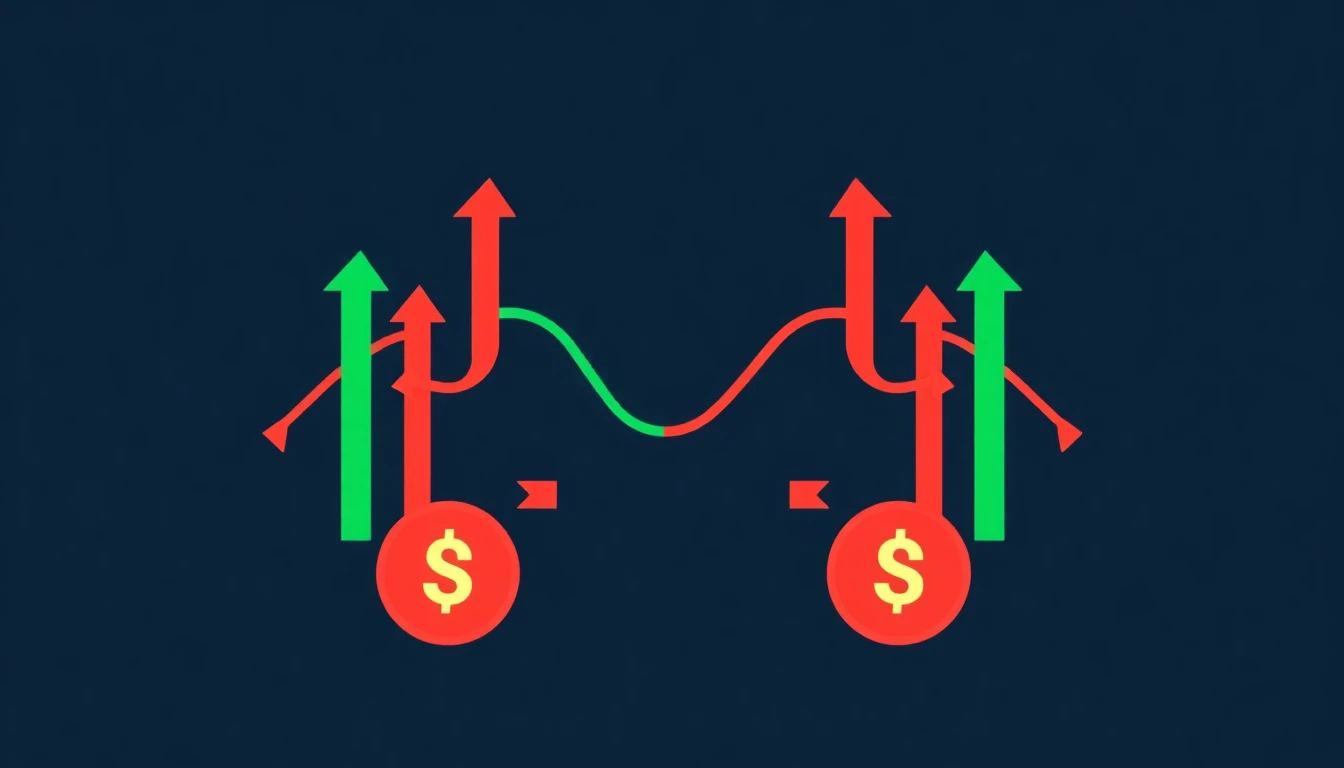
The funding rate is the most misunderstood—and most important—aspect of perpetual futures. It's the secret sauce that keeps perp prices tracking spot prices without expiration.
How Funding Works
Every 8 hours (on most exchanges), a payment is exchanged between long and short position holders:
- Positive funding rate: Longs pay shorts
- Negative funding rate: Shorts pay longs
The payment is proportional to your position size, not your margin.
Example: You hold a $100,000 long position. The funding rate is +0.01% (positive).
- You pay: $100,000 × 0.01% = $10 to short holders
- This happens every 8 hours (3x daily)
- Annualized: 0.01% × 3 × 365 = 10.95% per year
Why Funding Rates Exist
The funding rate creates economic incentives that anchor perp prices to spot:
When perps trade ABOVE spot (premium):
- Funding rate goes positive
- Longs pay shorts
- Incentivizes traders to short perps and buy spot (arbitrage)
- Selling pressure brings perp price down toward spot
When perps trade BELOW spot (discount):
- Funding rate goes negative
- Shorts pay longs
- Incentivizes traders to long perps and sell spot
- Buying pressure brings perp price up toward spot
Reading Funding Rates for Trading Signals
Funding rates reveal market sentiment and positioning:
| Funding Rate | Market Sentiment | Potential Signal |
|---|---|---|
| High positive (>0.05%) | Extremely bullish, overleveraged longs | Potential long squeeze coming |
| Moderate positive (0.01-0.03%) | Bullish, healthy market | Trend likely continues |
| Near zero | Balanced market | No strong directional bias |
| Moderate negative | Bearish sentiment | Shorts paying to stay short |
| High negative (<-0.03%) | Extremely bearish, overleveraged shorts | Potential short squeeze coming |
Pro Tip: Extremely high or low funding rates often precede violent moves in the opposite direction. When everyone is positioned one way and paying high funding, the market often reverses to liquidate the crowded side.
Funding Rate Arbitrage
Sophisticated traders exploit funding rates:
Cash-and-Carry Trade (when funding is positive):
- Buy spot BTC
- Short BTC perp for equivalent size
- Collect funding payments from longs
- Position is delta-neutral (no directional exposure)
- Profit = funding payments minus trading fees
This strategy earns 10-30% APY during bull markets when funding is consistently positive.
Understanding Margin and Leverage
Margin and leverage are interconnected concepts that determine your position size and risk.
Types of Margin
Initial Margin: The collateral required to open a position.
- With 10x leverage, initial margin = 10% of position size
- $10,000 position at 10x requires $1,000 initial margin
Maintenance Margin: The minimum collateral required to keep a position open.
- Typically 50% of initial margin (varies by exchange and asset)
- Falling below this triggers liquidation
Available Margin: Free collateral that can be used for new positions or as a buffer against losses.
Cross Margin vs Isolated Margin
This choice fundamentally affects your risk profile:
Isolated Margin:
- Each position has its own dedicated margin
- Maximum loss = isolated margin amount
- Other positions/balance unaffected if liquidated
- Use when: Trading volatile assets or uncertain setups
Cross Margin:
- Entire account balance serves as margin for all positions
- Positions share margin, preventing liquidation longer
- Entire account at risk if a position goes badly wrong
- Use when: Running multiple hedged positions or very confident trades
Recommendation: Start with isolated margin. It limits your downside to exactly what you allocate to each trade. Cross margin can lead to surprise liquidation of your entire account.
The Leverage Illusion
Exchanges advertise 100x or 125x leverage. This is a trap.
The Math of High Leverage:
| Leverage | Move to Liquidation | What That Means |
|---|---|---|
| 100x | ~1% | Normal volatility liquidates you |
| 50x | ~2% | A single candle can liquidate you |
| 25x | ~4% | Minor news events can liquidate you |
| 10x | ~10% | Significant move required |
| 5x | ~20% | Survives most pullbacks |
| 3x | ~33% | Survives major corrections |
| 2x | ~50% | Survives crashes |
Reality Check: Bitcoin regularly moves 5-10% in a day. Using 20x leverage means an ordinary day can wipe your position.
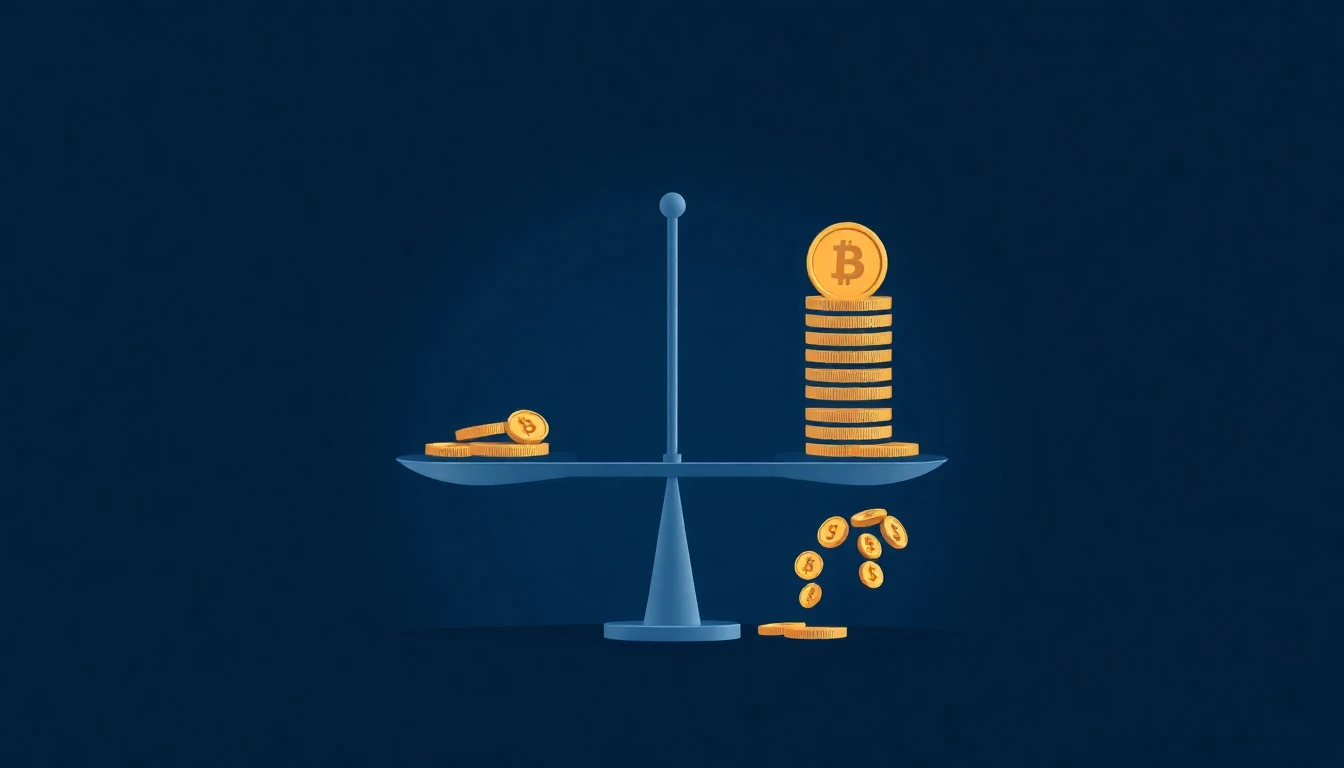
The Survivorship Principle: The traders still in the game after 2+ years almost universally use 3-10x leverage, not 50-100x. High leverage traders get filtered out through liquidation.
Liquidation: How It Works and How to Avoid It
Liquidation is the forced closure of your position when losses exceed your margin. Understanding liquidation mechanics is essential for survival.
How Liquidation Actually Works
When your position's unrealized losses approach your margin:
- Margin Ratio Alert: Exchange warns you (usually at 80% of maintenance margin)
- Maintenance Margin Breach: Position enters liquidation zone
- Liquidation Engine Takes Over: Exchange forcibly closes your position
- Insurance Fund: Covers any deficit if liquidation price is worse than your bankruptcy price
- Socialized Losses (rare): If insurance fund is depleted, profitable traders share losses
Calculating Your Liquidation Price
For a long position (simplified):
Liquidation Price = Entry Price × (1 - Initial Margin Ratio + Maintenance Margin Ratio)
For a short position (simplified):
Liquidation Price = Entry Price × (1 + Initial Margin Ratio - Maintenance Margin Ratio)
Practical Example:
- You long BTC at $50,000 with 10x leverage (10% initial margin)
- Maintenance margin = 0.5%
- Liquidation Price ≈ $50,000 × (1 - 0.10 + 0.005) = $45,250
A ~9.5% drop liquidates your 10x long position.
The Liquidation Cascade
Large liquidations trigger cascading effects:
- Major position gets liquidated
- Exchange market sells the position
- Selling pressure drives price lower
- Lower price liquidates more positions
- More selling, more liquidations
- "Liquidation cascade" or "long squeeze"

This is why you see violent 10-20% moves in minutes—thousands of overleveraged traders getting liquidated simultaneously.
Strategies to Avoid Liquidation
1. Use Appropriate Leverage
- Beginners: 2-3x maximum
- Intermediate: 3-5x maximum
- Experienced: 5-10x maximum
- Never: 25x+ (unless hedging or very specific strategies)
2. Set Your Liquidation Price at Impossible Levels Your liquidation price should be somewhere the asset essentially "can't" reach:
- For BTC long: Below the last major bear market bottom
- For BTC short: Above the all-time high
If your liquidation price is within reasonable price movement, your leverage is too high.
3. Use Stop Losses BEFORE Liquidation Set stop losses that trigger well before your liquidation price:
- If liquidation is at $45,000, set stop loss at $47,000
- You take a controlled loss instead of getting liquidated
4. Add Margin Before It's Too Late If a position moves against you but you believe in the trade:
- Add margin to lower your liquidation price
- Only do this if you'd open the same trade at current prices
5. Scale Into Positions Instead of one large entry:
- Enter 25% of intended position
- Add more if price moves against you (lower average entry)
- Keeps liquidation price distant while building position
Position Sizing: The Key to Survival
Position sizing separates traders who survive from those who blow up. This is the most important section of this guide.
The 1% Rule
🎯 THE GOLDEN RULE OF POSITION SIZING
Never risk more than 1% of your total trading capital on a single trade.
This single rule has saved more trading accounts than any strategy ever created. Memorize it. Live it.
What 1% Risk Looks Like (with $10,000 account):
| Stop Loss Distance | Maximum Position Size | Risk Amount |
|---|---|---|
| 5% below entry | $2,000 | $100 (1%) |
| 10% below entry | $1,000 | $100 (1%) |
| 2% below entry | $5,000 | $100 (1%) |
Position Size Formula
Position Size = (Account Size × Risk %) / (Entry Price - Stop Loss Price) × Entry Price
Example:
- Account: $10,000
- Risk per trade: 1% ($100)
- Entry: $50,000
- Stop loss: $48,000 (4% below entry)
Position Size = ($10,000 × 0.01) / 0.04 = $2,500
With 5x leverage, you need $500 margin for this $2,500 position.
Why Position Sizing Matters More Than Win Rate
Consider two traders:
Trader A: 70% win rate, risks 10% per trade
- 10 trades: 7 wins (+70%), 3 losses (-30%)
- Net: +40%
- BUT: A bad streak of 3 losses = -30%, massive drawdown
Trader B: 50% win rate, risks 1% per trade
- 10 trades: 5 wins (+5%), 5 losses (-5%)
- Net: 0% (breakeven before considering win size)
- A bad streak of 10 losses = -10%, easily recoverable
Trader B survives to improve their strategy. Trader A eventually hits a losing streak that destroys their account.
The Kelly Criterion (Advanced)
For those who want mathematical optimization:
Kelly % = (Win Probability × Average Win) - (Loss Probability × Average Loss) / Average Win
Most professional traders use fractional Kelly (25-50% of the Kelly suggestion) because:
- Win probability and average win are estimates, not certainties
- Full Kelly has significant drawdown potential
- Half Kelly achieves 75% of the growth with significantly less risk
Long vs Short: Mechanics and Strategy
Going Long (Betting Price Goes Up)
Mechanics:
- Buy the perpetual contract
- Profit if price increases
- Pay funding when positive
- Receive funding when negative
When to Long:
- Bullish technical setup
- Positive fundamental catalyst
- Oversold conditions after excessive selling
- Negative funding (being paid to be long)
Long Example:
- Entry: $50,000
- Leverage: 5x
- Position: $25,000 (using $5,000 margin)
- Take profit: $55,000 (+10%)
- Stop loss: $47,500 (-5%)
- Profit if hit TP: $2,500 (50% return on margin)
- Loss if hit SL: $1,250 (25% loss on margin)
Going Short (Betting Price Goes Down)
Mechanics:
- Sell the perpetual contract
- Profit if price decreases
- Pay funding when negative
- Receive funding when positive
When to Short:
- Bearish technical setup
- Negative catalyst or failed expectations
- Overbought conditions after excessive buying
- High positive funding (being paid to be short)
Short Example:
- Entry: $50,000
- Leverage: 5x
- Position: $25,000 (using $5,000 margin)
- Take profit: $45,000 (-10%)
- Stop loss: $52,500 (+5%)
- Profit if hit TP: $2,500 (50% return on margin)
- Loss if hit SL: $1,250 (25% loss on margin)
The Asymmetry of Shorts
Shorts have a unique risk profile:
Upside for Shorts is Capped: An asset can only fall 100% (to zero), but can rise infinitely.
- Long BTC at $50,000: Max loss is $50,000, unlimited upside
- Short BTC at $50,000: Max gain is $50,000, unlimited downside
This asymmetry means shorts require tighter risk management and faster stop losses.
Order Types for Perpetual Trading
Using the right order type is crucial for execution and risk management.
Market Orders
- Execute immediately at best available price
- Guaranteed fill, variable price
- Use when: Urgently need to enter/exit, fast-moving market
- Avoid when: Low liquidity, wide spreads
Limit Orders
- Execute only at your specified price or better
- Guaranteed price, not guaranteed fill
- Use when: Have time, want specific entry, adding liquidity
- Pro tip: Limit orders often get maker rebates (you get paid to trade)
Stop Market Orders
- Become market orders when trigger price is reached
- Guaranteed execution once triggered, variable fill price
- Use for: Stop losses where getting out matters more than price
Stop Limit Orders
- Become limit orders when trigger price is reached
- May not fill if price moves too fast
- Use for: Stop losses in liquid markets where slippage is unlikely
Take Profit Orders
- Close position at a profitable price level
- Can be market or limit
- Best practice: Use limit take profits to avoid slippage
Trailing Stop Orders
- Stop price moves with favorable price movement
- Locks in profits while allowing continuation
- Example: 5% trailing stop on a long moves up as price rises, triggers if price drops 5% from high
Reduce-Only Orders
- Can only reduce or close existing positions
- Prevents accidentally increasing position size
- Use when: Setting stop losses and take profits
Reading the Perpetual Market
Beyond price charts, perpetual markets provide unique data for analysis.
Open Interest
What it is: Total value of outstanding perpetual contracts.
How to interpret:
- Rising OI + Rising Price = New longs entering (bullish confirmation)
- Rising OI + Falling Price = New shorts entering (bearish confirmation)
- Falling OI + Rising Price = Shorts closing (less bullish)
- Falling OI + Falling Price = Longs closing (less bearish)
Key Insight: High open interest at price extremes often precedes volatility as those positions get squeezed.
Long/Short Ratio
What it is: Ratio of accounts holding long vs short positions.
How to interpret:
- Extreme long ratio (>70%): Most traders are long, potential long squeeze
- Extreme short ratio (>70%): Most traders are short, potential short squeeze
- Balanced (45-55%): No extreme positioning
Warning: This shows account count, not position size. One whale short can outweigh thousands of retail longs.
Liquidation Data
What it is: Real-time data on liquidated positions.
How to interpret:
- Large liquidations often mark local extremes
- Cascading liquidations create sharp moves
- After major liquidations, reduced open interest means less fuel for further moves
Funding Rate Across Exchanges
What it is: Funding rates vary between exchanges.
How to use:
- High funding divergence = arbitrage opportunity
- When all exchanges show extreme funding, sentiment is uniform
- Divergences can signal exchange-specific positioning
Risk Management Framework
A complete framework for surviving perpetual trading:
Pre-Trade Checklist
Before every trade, answer:
- What is my thesis? (Why will price move in my direction?)
- Where am I wrong? (What price proves my thesis invalid?)
- How much am I risking? (% of account)
- What is my reward:risk ratio? (Minimum 2:1)
- Where is my liquidation price? (Must be "impossible")
- What is the current funding? (Am I paying or receiving?)
- What is the current sentiment? (Am I trading with or against the crowd?)
The Trading Plan Template
📋 EXAMPLE TRADE PLAN
Asset: BTC/USDT Perpetual | Direction: Long
Parameter Value Notes Entry $50,000 At support level Stop Loss $48,000 4% below entry Take Profit 1 $54,000 +8%, close 50% Take Profit 2 $58,000 +16%, close rest Position Size $2,500 Margin Used $500 5x leverage Risk $100 1% of $10,000 Reward:Risk 2:1 to 4:1 Liquidation $40,500 19% below, safe Thesis: Higher low formed, RSI divergence, funding negative
Invalidation: Break below $48,000 support
Daily Risk Limits
Set hard limits and honor them:
- Maximum daily loss: 3% of account
- Maximum open risk: 5% of account across all positions
- Maximum correlation: No more than 2 positions in same direction on correlated assets
- Cooling off: After hitting daily loss limit, no trading for 24 hours
Weekly Review Process
Every week, review:
- Win rate and average win/loss
- Largest winner and largest loser—what can you learn?
- Trades that followed vs broke your rules
- Funding paid/received
- Maximum drawdown during the week
- Are you sized correctly based on recent volatility?
Common Mistakes That Destroy Accounts
Learn from others' expensive lessons:
1. "Averaging Down" into a Losing Position
The mistake: Adding to losers hoping for recovery. Why it fails: Increases exposure to a trade that's already wrong. The fix: Only add to winners, never to losers.
2. Moving Stop Losses
The mistake: Moving stop loss further away to avoid getting stopped out. Why it fails: Turns a controlled loss into an account-threatening loss. The fix: Set your stop and accept the loss if hit.
3. Revenge Trading
The mistake: Immediately re-entering after a loss to "make it back." Why it fails: Emotional trading leads to poor decisions. The fix: Walk away after a loss. Follow your daily limit rule.
4. Ignoring Funding Rates
The mistake: Holding positions for days while paying high funding. Why it fails: Funding can cost 1-3% per day in extreme conditions. The fix: Calculate funding cost as part of your trade plan.
5. FOMO Entries
The mistake: Entering because price is moving fast and you'll "miss it." Why it fails: Chasing usually gets you in at the worst price. The fix: No setup = no trade. Opportunity comes again.
6. Overleveraging for "One Big Win"
The mistake: Using high leverage to quickly recover losses. Why it fails: One bad trade at high leverage = liquidation. The fix: Lower leverage after losses, not higher.
7. Not Using Stop Losses
The mistake: "Mental stop losses" instead of actual orders. Why it fails: You won't execute during panic. The market will. The fix: Place stop loss order immediately after entry.
8. Trading Too Many Pairs
The mistake: Having positions in 10+ different assets. Why it fails: Can't manage risk or follow all markets effectively. The fix: Focus on 2-4 markets maximum.
Choosing a Perpetual Futures Platform
Centralized Exchanges (CEX)
Advantages:
- Deepest liquidity
- Lowest fees
- Best execution
- More trading pairs
Disadvantages:
- Requires KYC
- Custodial (not your keys)
- Can be restricted by jurisdiction
- Exchange risk (hacks, freezes)
Major Platforms (features vary by jurisdiction):
- Binance Futures
- Bybit
- OKX
- Kraken Futures
- Coinbase (limited derivatives)
Decentralized Perpetuals (DEX)
Advantages:
- Non-custodial (your keys)
- No KYC required
- Censorship resistant
- Transparent liquidation mechanisms
Disadvantages:
- Higher fees (gas + trading fees)
- Lower liquidity
- Potential smart contract risk
- Higher slippage on large orders
Major Protocols:
- GMX (Arbitrum, Avalanche)
- dYdX (own chain)
- Hyperliquid
- Vertex Protocol
- Perpetual Protocol
Selection Criteria
Choose based on:
- Jurisdiction: What's legally available to you?
- Liquidity: Check order book depth for your size
- Fees: Maker/taker fees, funding rates
- Security: Track record, insurance fund size
- Features: Order types, margin modes, API quality
- Withdrawal: Can you withdraw anytime without issues?
Advanced Strategies
Once you've mastered basics, consider these strategies:
Funding Rate Arbitrage
Setup: When funding is significantly positive
- Buy spot BTC
- Short equivalent BTC perp
- Net delta = zero (no directional risk)
- Collect funding payments
Risk: Requires efficient capital deployment, basis can move against you temporarily.
Basis Trading
Setup: When perp trades at significant premium/discount to spot
- If perp > spot: Short perp, buy spot
- If perp < spot: Long perp, sell spot
- Wait for convergence
- Close both positions
Risk: Convergence timing is uncertain, funding can erode profits.
Hedging Spot Holdings
Setup: You hold spot crypto but expect short-term downside
- Open short perp equal to spot holdings
- If price drops: Spot loses, perp gains (hedged)
- Close perp when expecting upside again
Benefit: Maintain spot exposure for staking/airdrops while hedging drawdowns.
Scaling Strategy
Setup: Build positions gradually
- Enter 25% of intended size at first signal
- Add 25% if price moves against you (better entry)
- Add 25% on first confirmation
- Add final 25% on trend confirmation
Benefit: Better average entry, reduced timing risk.
Tax Implications
Disclaimer: Tax laws vary by jurisdiction. Consult a tax professional.
General Principles
Perpetual futures are typically taxed as:
- Capital gains/losses in most jurisdictions
- Short-term if held < 1 year (higher rates)
- Some jurisdictions treat derivatives differently than spot
What creates a taxable event:
- Closing a position (realized gain/loss)
- Liquidation (realized loss)
- Receiving funding payments (potentially ordinary income)
- Paying funding (potentially deductible)
Record Keeping
Maintain records of:
- Every trade entry and exit
- Funding payments (paid and received)
- Liquidations
- Margin deposits and withdrawals
- Screenshots of significant positions
Tools: Most exchanges provide tax reports. Third-party tools like Koinly, CoinTracker, or TokenTax can aggregate across exchanges.
FAQ
What's the minimum amount needed to start trading perpetuals?
Technically, some exchanges allow positions as small as $10-100. Practically, start with at least $1,000-5,000 to have enough margin for proper position sizing and to absorb a few losses without account destruction.
How much can I make trading perpetuals?
This is the wrong question. Ask instead: "How can I survive long enough to become profitable?" Most traders lose money. Focus on risk management and education before expecting profits.
What leverage should a beginner use?
2-3x maximum. Seriously. Even if the exchange offers 100x, ignore it. Higher leverage is not for beginners—it's for specific hedging strategies by professionals.
How do I avoid liquidation?
- Use low leverage (2-5x)
- Set stop losses before liquidation price
- Don't add to losing positions
- Keep your liquidation price at "impossible" levels
- Use isolated margin to limit risk
Is it better to trade perps on CEX or DEX?
CEX for: Best liquidity, lowest fees, more pairs, better for active trading DEX for: Privacy, self-custody, no KYC, lower counterparty risk
Start on CEX for the better execution, graduate to DEX if decentralization matters to you.
What's the best time to trade perpetuals?
Volatility clusters around:
- US market hours (9:30 AM - 4:00 PM ET)
- Overlap of US/EU sessions
- Major news events and data releases
- Weekly/monthly option expiries
Avoid: Low liquidity periods (weekends, holidays) unless specifically trading the lower liquidity.
Can I use perpetuals to hedge my spot portfolio?
Yes, this is one of the best use cases. If you hold spot crypto long-term but expect short-term downside, open a short perp position to offset potential losses.
Conclusion
Perpetual futures are powerful instruments that can amplify your crypto trading—for better or worse. The leverage that makes them attractive is the same leverage that destroys most traders who use them.
Key Takeaways:
- Leverage is a tool, not a goal: Use the minimum leverage needed for your strategy
- Funding rates matter: Factor them into every trade lasting more than a day
- Position sizing > Everything: Risk 1% per trade maximum
- Liquidation is preventable: Set your liquidation price at impossible levels
- The market doesn't care about your positions: It will liquidate you without emotion
Start small. Use low leverage. Keep detailed records. Review your trades weekly. Most importantly, treat every dollar in your trading account as money you're prepared to lose completely.
The traders who survive are not the ones who make the biggest gains—they're the ones who manage risk well enough to stay in the game long enough to improve.
Ready to deepen your trading knowledge? Explore our technical analysis basics to improve your entries, or learn about risk management frameworks to protect your capital.
For understanding the broader market context, check out our guide on reading crypto market cycles.
Sources and Attribution
Exchange Documentation:
- Binance Futures Trading Guide - Margin, liquidation, and funding mechanics
- Bybit Learn - Perpetual contract specifications
- dYdX Academy - Decentralized perpetuals education
Research & Data:
- Coinglass - Open interest, funding rates, and liquidation data across exchanges
- The Block Research - Derivatives market volume and analytics
- Laevitas - Options and perpetual futures analytics
Risk Management:
- Position sizing concepts adapted from Van Tharp's "Trade Your Way to Financial Freedom"
- Kelly Criterion application from quantitative trading literature
Funding Rate Mechanics:
- BitMEX Research - Original perpetual swap design and funding mechanism (BitMEX pioneered the perpetual swap in 2016)
Regulatory Context:
- Trading derivatives legality and taxation vary significantly by jurisdiction. Always verify local regulations before trading.
Further Reading:
What's Next?
Disclaimer: This guide is for educational purposes only and should not be considered financial advice. Cryptocurrency investments carry significant risk. Always do your own research before making investment decisions.