
Crypto Tax Optimization: Legal Strategies to Minimize Your Tax Bill
Learn proven, legal strategies to minimize your cryptocurrency tax burden. Master cost basis methods, tax-loss harvesting, and DeFi tax planning.
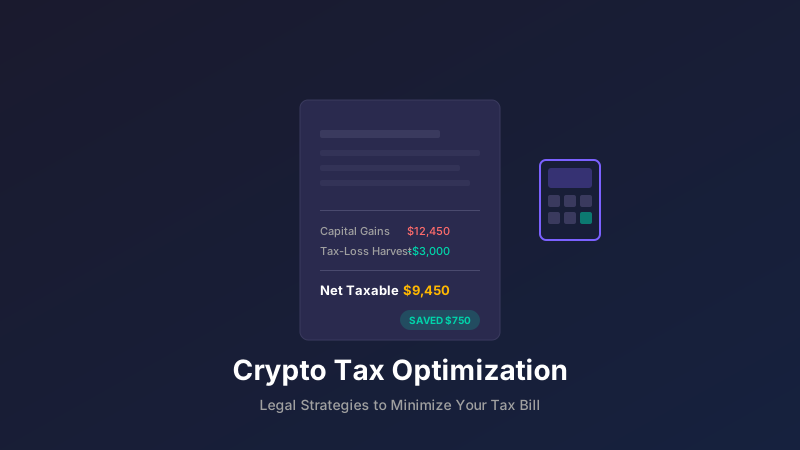
Cryptocurrency taxation remains one of the most misunderstood aspects of digital asset ownership. While the tax implications of buying, selling, and trading crypto can seem overwhelming, understanding the rules gives you the power to make strategic decisions that legally minimize your tax burden. This comprehensive guide walks you through everything you need to know about crypto taxes—from identifying taxable events to implementing sophisticated tax-loss harvesting strategies—so you can keep more of your gains while staying fully compliant with tax authorities.
Disclaimer: This guide is for educational purposes only and does not constitute tax, legal, or financial advice. Tax laws vary by jurisdiction and change frequently. Always consult a qualified tax professional for advice specific to your situation.
TL;DR - The Quick Takeaways
- Every crypto-to-crypto trade is a taxable event—not just cashing out to fiat currency
- Holding period matters: Assets held over one year qualify for lower long-term capital gains rates (0%, 15%, or 20% in the US vs. up to 37% for short-term)
- Tax-loss harvesting can offset unlimited capital gains and up to $3,000 of ordinary income annually, with losses carrying forward indefinitely
- Cost basis method selection (FIFO, LIFO, HIFO, Specific ID) can dramatically impact your tax liability—choose wisely before selling
- DeFi activities create complex tax situations: staking rewards, LP positions, and yield farming often generate ordinary income at receipt
- Meticulous record-keeping is essential—the IRS can request documentation for any transaction going back years
Table of Contents
- Understanding Crypto Taxation Basics
- Taxable vs. Non-Taxable Events
- Cost Basis Methods Explained
- Tax-Loss Harvesting Strategies
- Long-Term vs. Short-Term Capital Gains
- DeFi Tax Complexity
- NFT Tax Treatment
- Record Keeping Best Practices
- Tax Software Comparison
- Working With Crypto-Savvy Accountants
- International Considerations
- Common Tax Optimization Strategies
- Sources and Attribution
Understanding Crypto Taxation Basics
The IRS and most tax authorities worldwide treat cryptocurrency as property, not currency. This fundamental classification has significant implications: every time you dispose of cryptocurrency—whether by selling, trading, or spending—you potentially trigger a capital gains or loss event.
Your tax liability depends on two primary factors:
- The type of transaction: Was it a sale, trade, income event, or gift?
- The holding period: Did you hold the asset for more than one year?
How Capital Gains Are Calculated
Capital gains (or losses) are calculated using a simple formula:
Capital Gain/Loss = Fair Market Value at Disposal - Cost Basis
Cost basis includes not just what you paid for the cryptocurrency but also any fees associated with acquiring it (trading fees, gas fees, etc.). Similarly, when calculating proceeds, you should deduct selling fees to arrive at your net capital gain.
Example:
- You bought 1 ETH for $2,000 (including $20 in fees)
- Your cost basis: $2,020
- You sold 1 ETH for $3,500 (after $25 in fees)
- Your proceeds: $3,475
- Your capital gain: $3,475 - $2,020 = $1,455

Taxable vs. Non-Taxable Events
Understanding which activities trigger taxes is crucial for proper planning. Many crypto users are surprised to learn that certain common activities are taxable.
Taxable Events
| Event Type | Tax Treatment | When Tax Applies |
|---|---|---|
| Selling crypto for fiat | Capital gains/loss | At time of sale |
| Trading crypto-to-crypto | Capital gains/loss | At time of trade |
| Spending crypto on goods | Capital gains/loss | At time of purchase |
| Receiving mining rewards | Ordinary income | At time of receipt |
Additional taxable events include:
- Staking rewards: Taxed as ordinary income at fair market value when received
- Airdrops: Taxed as ordinary income when you gain dominion and control
- Hard fork tokens: Generally taxed as income when you can access and trade them
- Interest from lending: Ordinary income at fair market value when credited
- Payment for goods/services: Ordinary income if you're paid in crypto
- Referral bonuses: Ordinary income at fair market value
Non-Taxable Events
Not everything triggers a tax event. The following are generally not taxable:
- Buying crypto with fiat currency: No gain or loss until you dispose
- Transferring between your own wallets: Moving crypto between personal wallets or exchanges
- Holding cryptocurrency: Simply holding (HODLing) does not trigger taxes
- Gifting crypto below the annual exclusion: In 2026, gifts under $18,000 per recipient per year don't require gift tax filing
- Donating to qualified charities: May even provide a tax deduction
- Wrapping/unwrapping tokens: The IRS hasn't provided clear guidance, but many practitioners treat these as non-taxable
Important Note: While transferring between wallets isn't taxable, you must maintain clear records proving ownership of both wallets. Failure to document transfers can make it difficult to establish cost basis later.
Cost Basis Methods Explained
Your choice of cost basis method can significantly impact your tax liability. The IRS allows several methods, but you must apply your chosen method consistently and maintain proper records.
FIFO (First In, First Out)
The most common method, FIFO assumes you sell your oldest assets first.
Example:
- January: Buy 1 BTC at $40,000
- March: Buy 1 BTC at $45,000
- June: Sell 1 BTC at $50,000
Using FIFO, you'd sell the January BTC first:
- Gain: $50,000 - $40,000 = $10,000
LIFO (Last In, First Out)
LIFO assumes you sell your most recently acquired assets first.
Using the same example with LIFO:
- Gain: $50,000 - $45,000 = $5,000
In this case, LIFO results in a lower taxable gain.
HIFO (Highest In, First Out)
HIFO sells your highest-cost assets first, typically minimizing gains or maximizing losses.
Example:
- January: Buy 1 BTC at $40,000
- March: Buy 1 BTC at $55,000 (price dropped since)
- June: Sell 1 BTC at $50,000
Using HIFO:
- Loss: $50,000 - $55,000 = -$5,000 (a deductible loss!)
Specific Identification
This method allows you to choose exactly which units you're selling, giving maximum flexibility.
| Method | Best Used When | Tax Impact |
|---|---|---|
| FIFO | Default/simple tracking | Often higher gains |
| LIFO | Recent purchases are higher | Usually lower gains |
| HIFO | Maximizing losses | Lowest gains possible |
| Specific ID | Strategic planning | Maximum flexibility |
Pro Tip: To use Specific Identification, you must clearly identify which specific units you're selling at the time of sale and maintain records proving this identification. Some exchanges allow lot selection; otherwise, document your intent before executing trades.
Tax-Loss Harvesting Strategies
Tax-loss harvesting is one of the most powerful legal strategies for reducing your crypto tax burden. The strategy involves selling assets at a loss to offset capital gains from other investments.
How It Works
- Identify positions trading below your cost basis
- Sell those positions to realize the loss
- Use the loss to offset gains (unlimited capital gains offset)
- Offset ordinary income (up to $3,000 per year in the US)
- Carry forward excess losses indefinitely
The Crypto Advantage: No Wash Sale Rule (Currently)
Unlike stocks, cryptocurrency is currently not subject to the wash sale rule in the United States. This means you can:
- Sell Bitcoin at a loss
- Immediately repurchase Bitcoin
- Claim the full loss on your taxes
Warning: This may change soon. Legislation has been proposed to extend wash sale rules to cryptocurrency. Always verify current regulations and consult a tax professional.
Tax-Loss Harvesting Example
Scenario:
- You have $50,000 in realized gains from trading this year
- You hold 10 ETH purchased at $4,000 each ($40,000 total)
- Current ETH price: $2,500 (position worth $25,000)
- Unrealized loss: $15,000
Strategy:
- Sell all 10 ETH for $25,000, realizing a $15,000 loss
- Immediately repurchase 10 ETH at $25,000 (new cost basis)
- Apply $15,000 loss against your $50,000 gains
- Net taxable gains reduced to $35,000
Tax Savings (assuming 20% long-term rate):
- Without harvesting: $50,000 × 20% = $10,000 tax
- With harvesting: $35,000 × 20% = $7,000 tax
- Savings: $3,000
Strategic Timing
Consider these timing strategies for maximum benefit:
- Year-end harvesting: Review portfolio in December to realize losses before year-end
- Volatility harvesting: Major market dips provide harvesting opportunities throughout the year
- Paired harvesting: Match gains and losses strategically within the same tax year
Long-Term vs. Short-Term Capital Gains
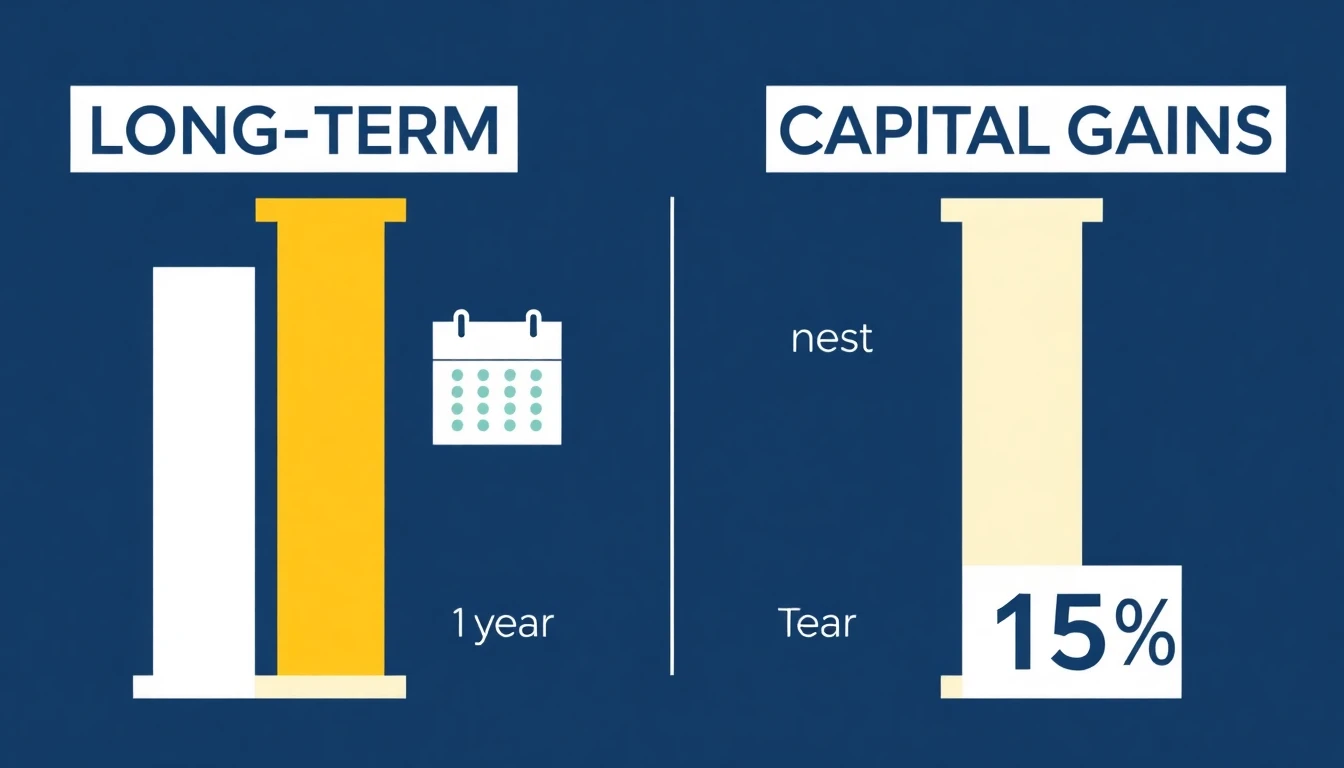
The difference between long-term and short-term capital gains treatment can save you thousands in taxes. In the US, the distinction is simple: assets held for more than one year qualify for preferential long-term rates.
2026 US Tax Rates
| Taxable Income (Single) | Short-Term Rate | Long-Term Rate |
|---|---|---|
| Up to $47,150 | 10-12% | 0% |
| $47,150 - $518,900 | 22-35% | 15% |
| Over $518,900 | 37% | 20% |
Note: Additional 3.8% Net Investment Income Tax may apply for high earners.
The Power of Holding
Example:
- You bought 1 BTC at $40,000
- Current value: $100,000
- Gain: $60,000
If you sell after 11 months (short-term):
- At 32% bracket: $60,000 × 32% = $19,200 tax
If you wait 1 more month (long-term):
- At 15% rate: $60,000 × 15% = $9,000 tax
- Savings: $10,200
Optimization Strategies
- Track holding periods meticulously for each lot
- Consider delaying sales by weeks or months to reach long-term status
- Use HIFO with holding period awareness to prioritize selling long-term held, high-cost-basis lots
- Plan major sales in low-income years when possible
DeFi Tax Complexity
Decentralized Finance (DeFi) introduces significant tax complexity that even experienced crypto users often underestimate. Each protocol interaction may trigger multiple taxable events.
Staking Rewards
Staking rewards are generally treated as ordinary income at the time you receive them (or gain control over them).
Tax Treatment:
- Income amount: Fair market value at time of receipt
- New cost basis: Same as income amount recognized
- Future sale: Capital gain/loss from new cost basis
Example:
- You stake 32 ETH for validation
- Over the year, you receive 1.5 ETH in rewards
- Average price at receipt times: $3,000 per ETH
- Ordinary income: 1.5 × $3,000 = $4,500
When you later sell that 1.5 ETH:
- Cost basis: $4,500
- If sold at $5,000: Capital gain of $500
Liquidity Pool Positions
Providing liquidity creates multiple tax considerations:
| Event | Tax Treatment | Complexity |
|---|---|---|
| Depositing into LP | Possible disposal (trade) | High |
| Receiving LP tokens | May be taxable | Uncertain |
| Earning trading fees | Ordinary income | Medium |
| Impermanent loss | Not directly deductible | High |
| Withdrawing from LP | Possible disposal (trade) | High |
Current Ambiguity: The IRS has not provided definitive guidance on LP deposits/withdrawals. Conservative approaches treat each as a taxable exchange; aggressive approaches treat them as non-taxable conversions. Document your methodology and be prepared to defend it.
Yield Farming
Yield farming income streams include:
- Governance token rewards: Ordinary income at receipt
- Trading fee shares: Ordinary income when claimed
- Bonus rewards: Ordinary income at receipt
Important: Many yield farmers compound rewards automatically. Each auto-compound may be a taxable event (income recognition followed by reinvestment).
Liquidations
If your DeFi loan is liquidated:
- The liquidation is typically treated as a sale of collateral
- You realize a capital gain or loss on the liquidated assets
- Any remaining debt forgiveness may be taxable income
NFT Tax Treatment
Non-fungible tokens (NFTs) have unique tax considerations that differ from fungible cryptocurrencies.
For Collectors/Investors
| Action | Tax Treatment |
|---|---|
| Buying NFT with crypto | Taxable disposal of crypto |
| Selling NFT for crypto | Capital gain/loss on NFT |
| Selling NFT for fiat | Capital gain/loss on NFT |
| Receiving NFT airdrop | Ordinary income at FMV |
Collectibles Tax Rate
The IRS may classify certain NFTs as "collectibles," subject to a higher maximum long-term capital gains rate of 28% instead of 20%. This potentially applies to:
- Digital art NFTs
- Collectible-themed NFTs
- NFTs representing physical collectibles
Guidance Pending: The IRS requested comments on NFT collectible classification in 2023 but has not issued final regulations. Track developments closely.
For Creators
NFT creators face different rules:
- Primary sale proceeds: Ordinary income (self-employment income)
- Royalties on secondary sales: Ordinary income
- Expenses: Deductible business expenses (gas fees, platform fees, marketing)
- Self-employment tax: Applies to net self-employment income

Record Keeping Best Practices
Meticulous record-keeping is not optional—it's essential for accurate tax reporting and audit defense. The IRS can request documentation for any transaction, and the burden of proof is on you.
What to Track for Every Transaction
- Date and time of transaction (in UTC or your local timezone—be consistent)
- Type of transaction (buy, sell, trade, transfer, income, etc.)
- Amount of cryptocurrency involved
- Fair market value in USD at time of transaction
- Exchange or platform where transaction occurred
- Transaction ID/hash for on-chain transactions
- Wallet addresses (sending and receiving)
- Fees paid (in crypto and USD equivalent)
- Purpose of transaction (investment, business, personal use)
Recommended Documentation
Maintain these records for at least seven years (many advisors recommend indefinitely for crypto):
- Exchange transaction history exports (download regularly—platforms can shut down)
- Wallet transaction records (on-chain history)
- Screenshots of prices at time of significant transactions
- Purchase receipts and confirmations
- Records of transfers between personal wallets
- Documentation of airdrops and their value
- DeFi protocol interaction records
Organization Tips
| Method | Pros | Cons |
|---|---|---|
| Spreadsheets | Full control, free | Time-consuming, error-prone |
| Tax software | Automated, integrated | Cost, learning curve |
| Professional service | Accurate, defensible | Expensive |
| Hybrid approach | Balanced | Requires coordination |
Pro Tip: Export your exchange data monthly or quarterly. Exchanges can limit historical data access, go offline, or close your account. Don't wait until tax time to discover missing records.
Tax Software Comparison
Crypto tax software automates the complex calculations required for accurate reporting. Here's how the major platforms compare:
CoinLedger
Best for: Most crypto investors, DeFi users, TurboTax integration
- Pricing: Free portfolio tracker; $49-$199/year for tax reports
- Supported exchanges: 400+ integrations including all major exchanges and 100+ blockchains
- DeFi support: Excellent (staking, LP positions, airdrops, yield farming)
- Unique features: Official TurboTax partner, tax-loss harvesting dashboard, done-for-you service option
- Users: 700,000+ investors, $70B+ transactions processed
Koinly
Best for: International users, DeFi-heavy portfolios
- Pricing: Free plan available; $49-$279/year for tax reports
- Supported exchanges: 700+ integrations
- DeFi support: Excellent (supports most major protocols)
- Unique features: Multiple country support, margin trading, excellent UI
CoinTracker
Best for: Beginners, portfolio tracking + taxes
- Pricing: Free up to 25 transactions; $59-$199/year
- Supported exchanges: 500+ integrations
- DeFi support: Good (improving regularly)
- Unique features: Real-time portfolio tracking, tax optimization suggestions
TokenTax
Best for: Complex situations, professional support
- Pricing: $65-$3,500/year (includes CPA review options)
- Supported exchanges: 100+ integrations
- DeFi support: Good, with expert assistance available
- Unique features: Full-service options, audit support, reconciliation help
ZenLedger
Best for: Active traders, TurboTax integration
- Pricing: Free up to 25 transactions; $49-$399/year
- Supported exchanges: 400+ integrations
- DeFi support: Moderate
- Unique features: Tax-loss harvesting tool, TurboTax integration
Choosing the Right Software
Consider these factors:
- Number of transactions: Free tiers often have low limits
- DeFi usage: Not all software handles complex DeFi equally
- International needs: Some focus primarily on US tax law
- Professional support: Critical for complex situations
- Export formats: Ensure compatibility with your tax filing method
Practical tip: Most crypto tax tools offer a free portfolio tracker tier — use it to verify import accuracy and DeFi coverage before paying for tax-form generation. Pick whichever tool best handles your specific exchanges, chains, and DeFi protocols.

Working With Crypto-Savvy Accountants
While software helps with calculations, a knowledgeable tax professional provides strategic guidance that can save significant money and prevent costly mistakes.
When You Need a Professional
Consider professional help if you have:
- Large portfolio gains or losses ($50,000+)
- Complex DeFi activity (multiple protocols, yield farming)
- Mining or staking business income
- NFT creation income
- International tax considerations
- Previous years of unfiled crypto taxes
- IRS inquiry or audit notice
Finding Qualified Help
Look for professionals with:
- CPA license (Certified Public Accountant)
- Demonstrated crypto experience (ask for references)
- Understanding of blockchain mechanics (not just tax law)
- Familiarity with major DeFi protocols
- Updated knowledge (crypto tax law changes rapidly)
Questions to Ask
- "How many crypto clients do you currently serve?"
- "What crypto tax software do you use or recommend?"
- "How do you handle DeFi transactions?"
- "What's your approach to ambiguous tax situations?"
- "Do you provide audit representation if needed?"
Cost Expectations
| Service Level | Typical Cost | Best For |
|---|---|---|
| Tax prep only | $300-$800 | Simple portfolios |
| Prep + planning | $800-$2,000 | Moderate complexity |
| Full service | $2,000-$10,000+ | Complex situations |
International Considerations
Disclaimer: Tax laws vary dramatically by jurisdiction. This section provides general awareness only—consult local tax professionals for specific guidance.
Key Differences by Region
United States:
- Property treatment, capital gains tax applies
- Income tax on mining, staking, airdrops
- No wash sale rule (currently) for crypto
- FATCA reporting requirements for foreign accounts
United Kingdom:
- Capital Gains Tax with £3,000 annual allowance (2024/25)
- Income tax on mining, staking, airdrops
- Bed and breakfasting rules (30-day matching)
Germany:
- Tax-free if held more than 1 year (for individuals)
- Income tax if sold within 1 year
- €600 annual exemption for private sales
Portugal:
- Previously tax-free for individuals
- Recent changes introduce taxation on short-term gains
- Evolving regulatory landscape
Singapore:
- No capital gains tax (generally)
- Income tax may apply to trading businesses
- GST considerations for businesses
Reporting Foreign Holdings
US taxpayers must report foreign crypto holdings in certain circumstances:
- FBAR (FinCEN 114): May apply to foreign exchange accounts
- Form 8938: Foreign financial assets over threshold
- Form 8949: All crypto disposals, regardless of location
Moving Between Jurisdictions
If you're considering relocation for tax purposes:
- Understand exit tax rules in your current country
- Research residency requirements for new jurisdiction
- Consider economic substance requirements
- Plan for dual-reporting period
- Work with professionals in both jurisdictions
Common Tax Optimization Strategies
Here are proven, legal strategies to minimize your crypto tax burden:
1. Strategic Timing of Sales
- Delay sales to reach long-term status (1 year +)
- Accelerate sales in low-income years (career gap, retirement)
- Bunch gains and losses strategically across tax years
2. Maximize Charitable Giving
Donating appreciated crypto to qualified charities:
- Avoids capital gains tax entirely
- Provides fair market value deduction (if held 1+ year)
- Best with highly appreciated assets
Example:
- You bought ETH at $500, now worth $5,000
- Sell and donate cash: Pay ~$900 in taxes, donate $4,100
- Donate ETH directly: Pay $0 in taxes, deduct $5,000
3. Opportunity Zone Investments
Investing capital gains in Qualified Opportunity Zone funds:
- Defer capital gains until 2026 or sale
- Reduce tax on deferred gain by 10% if held 5+ years
- Eliminate tax on new appreciation if held 10+ years
4. Self-Directed IRA/401(k)
Investing crypto through self-directed retirement accounts:
- Traditional IRA: Tax-deferred growth, taxed at withdrawal
- Roth IRA: After-tax contributions, tax-free growth and withdrawal
- Complexity: Requires specialized custodian, prohibited transaction rules
5. Gift and Estate Planning
- Annual gift exclusion: Gift up to $18,000/recipient without gift tax
- Lifetime exemption: $13.61 million (2024) for larger gifts
- Step-up in basis at death: Heirs receive assets at current FMV
6. Business Entity Structure
For active traders or mining operations:
- Potential ordinary loss deduction (beyond $3,000 limit)
- Business expense deductions (equipment, utilities, education)
- Self-employed retirement contributions
- Complexity and cost considerations

Putting It All Together
Effective crypto tax optimization requires a proactive, year-round approach:
Quarterly Actions
- Export transaction data from all exchanges and wallets
- Review potential harvesting opportunities during market dips
- Update tracking spreadsheets or software
- Note any ambiguous transactions for professional consultation
Year-End Checklist
- Complete tax-loss harvesting by December 31
- Review holding periods for planned sales
- Calculate estimated tax liability
- Make estimated tax payment if required
- Gather all income documentation (staking, airdrops, etc.)
- Export final transaction data from all sources
Common Mistakes to Avoid
- Ignoring crypto-to-crypto trades as taxable events
- Missing cost basis documentation for early purchases
- Forgetting about airdrops and forks as income
- Not accounting for fees in cost basis calculations
- Assuming losses without documentation
- Last-minute tax prep without proper records
Final Reminder: Tax optimization is legal and encouraged—tax evasion is not. Always report honestly, maintain documentation, and when in doubt, consult a qualified professional.
Sources and Attribution
This guide synthesizes information from authoritative sources including:
- IRS Notice 2014-21 - Initial cryptocurrency tax guidance
- IRS Revenue Ruling 2019-24 - Guidance on hard forks and airdrops
- IRS FAQs on Virtual Currency - Ongoing guidance updates
- Congressional Research Service Reports - Cryptocurrency taxation analysis
- American Institute of CPAs - Professional practice guidance
- Tax Foundation - Capital gains tax rate tables and analysis
Last Updated: January 2026
Tax laws change frequently. While we strive to keep this guide current, always verify current regulations and consult qualified professionals for your specific situation.
Looking for more investing guides? Check out our Crypto Exit Strategy Framework and Crypto Passive Income Strategies for complementary strategies.
What's Next?
Disclaimer: This guide is for educational purposes only and should not be considered financial advice. Cryptocurrency investments carry significant risk. Always do your own research before making investment decisions.