
NFT Market Cycles: Mastering Floor Price Dynamics and Timing Strategies
Navigate NFT market cycles like a pro. Learn floor price dynamics, wash trading detection, optimal entry/exit timing, and strategies for bull and bear markets.
nft_strategist
(Updated N/A)
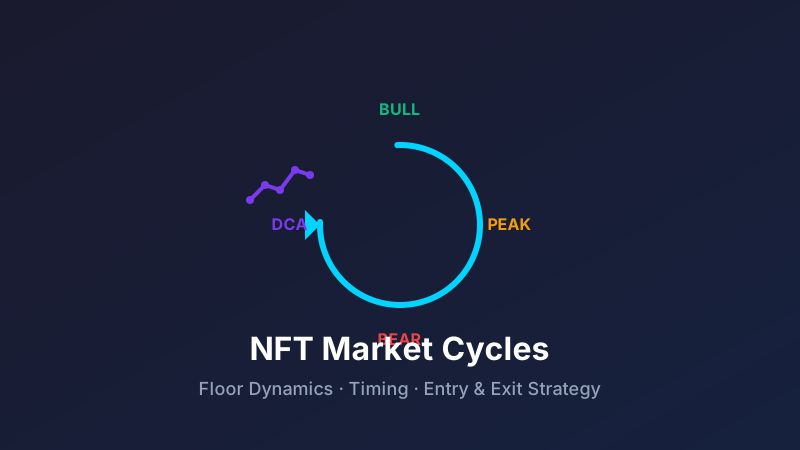
If you've been in NFTs for more than a few months, you've experienced the emotional rollercoaster: euphoric mints that instantly 5x, brutal floor price dumps that evaporate gains overnight, and the agonizing FOMO of watching collections moon after you sold.
Here's the truth most NFT influencers won't tell you: the market moves in predictable cycles, and understanding these patterns is the difference between getting rekt and building generational wealth. I've traded through multiple NFT bull and bear cycles since 2021, from the summer explosion to the 2022 collapse to the 2024 recovery. The patterns repeat with remarkable consistency.
In this deep dive, I'll share my framework for understanding NFT market cycles, reading floor price dynamics, detecting wash trading, and timing your entries and exits. Whether you're a flipper, long-term holder, or somewhere in between, this knowledge is essential.
Understanding NFT Market Cycles
NFT markets don't move independently of broader crypto markets, but they have their own unique rhythms and characteristics.
The Four Phases of NFT Bull Markets
Phase 1: The Bottom (Accumulation)
This is where smart money positions itself while everyone else has given up on NFTs.
Characteristics:
- Blue chips trading 60-80% below ATH
- Low volume across the board (under 100 ETH/day for major collections)
- Discord servers quiet, with core community remaining
- New projects struggling to mint out
- Media declaring "NFTs are dead"
- Ethereum gas fees under 20 gwei
What to Do:
- Accumulate blue chips at generational pricing
- Build positions in fundamentally strong projects
- Network in communities while they're small
- Study and prepare for the next wave
Recent Example: Late 2022 through mid-2023, when Bored Apes dipped to 30 ETH and Azukis hit 5 ETH.
Phase 2: Early Bull (Awakening)
Smart money starts moving, creating the first signs of life.
Characteristics:
- Blue chip floors slowly grinding higher (10-20% monthly gains)
- Volume increasing but still below previous peaks
- New quality projects starting to mint out
- Influencers cautiously returning
- Gas fees rising to 30-50 gwei
- Excitement building but skepticism remains
What to Do:
- Continue accumulating, but be more selective
- Take partial profits on 2-3x flips to compound capital
- Start researching upcoming mints more actively
- Watch for emerging narratives (AI, gaming, music, etc.)
Phase 3: Peak Bull (Mania)
This is where life-changing money is made—and lost.
Characteristics:
- Everything pumping, including obvious scams
- FOMO driving irrational behavior
- New projects minting out in seconds
- Floor prices doubling weekly
- Mainstream media covering NFTs
- Gas wars making transactions cost $500+
- Celebrities and brands launching projects
- Your non-crypto friends asking how to buy NFTs
What to Do:
- Take profits aggressively (this is hardest when everyone's greedy)
- Sell into strength, not panic
- Avoid new projects unless conviction is extremely high
- Keep core blue chip positions but trim 30-50%
- Set price alerts and stick to exit plans
Warning: This phase feels like it will last forever. It never does.
Phase 4: The Crash (Distribution)
Where euphoria turns to despair, often rapidly.
Characteristics:
- Blue chip floors dropping 20-40% in days
- Volume surging (panic selling)
- New projects failing to mint
- Floor sweepers getting rekt
- Influencers going quiet or shilling harder (desperation)
- Gas fees collapsing as activity plummets
- "Diamond hands" rhetoric intensifying
What to Do:
- Preserve capital—cash is king
- Don't catch falling knives (wait for bottoms to form)
- Review what worked and what didn't
- Maintain small positions in highest-conviction blue chips
- Prepare shopping list for Phase 1
Floor Price Dynamics: Reading the Market
Floor price is the single most important metric in NFT markets, but most traders misunderstand what it's telling them.
What Floor Price Really Means
Floor price isn't just "the cheapest available NFT." It's a complex signal reflecting:
- Holder Conviction: How desperate is the weakest holder to exit?
- Buyer Demand: How much capital is waiting to deploy?
- Market Sentiment: What does the collective believe about future value?
- Liquidity Depth: How many sales can occur before price impact?
Floor Price Patterns to Watch
Healthy Floor Price Movement:
- Gradual upward slope (5-15% weekly in bull market)
- Consistent buy-side volume
- Floor sweeps followed by short consolidation
- Listings decreasing as price rises
Example: Azuki's rise from 3 ETH to 30 ETH in early 2022 showed this pattern—steady buying, declining listings, organic growth.
Unhealthy Floor Price Movement:
- Vertical pumps (30%+ in a day without major news)
- High listing count relative to total supply
- Volume spikes without price movement (churning)
- Floor constantly being undercut
Red Flag Pattern: When floor rises 50% but listings increase 30%, someone is likely manipulating price while preparing to dump.
Floor Depth Analysis
Don't just look at floor price—analyze the "floor depth":
- Check listings 0-5% above floor: Thin = bullish (scarcity), thick = bearish (supply overhang)
- Review sales history: Are floors being swept or just one-off buys?
- Monitor trait floor gaps: When rare trait floors collapse toward common trait floors, it signals weakness
Pro Technique: I track the "5% rule"—if there are more than 5% of total supply listed within 5% of floor price, I avoid buying. It suggests holders are eager to exit.
Wash Trading Detection: Don't Get Fooled
Wash trading (buying from yourself to fake volume) is rampant in NFT markets. Learning to spot it protects you from scams and helps you find genuine opportunities.
Common Wash Trading Patterns
1. Circular Trading
The same NFTs trading between the same small group of wallets.
How to Detect:
- Check the trading history on Etherscan or OpenSea
- Look for NFTs that trade 10+ times in 24 hours
- Trace wallet connections (often funded from same source)
Tool: Use Nansen's wallet labeling to identify connected addresses.
2. Price Manipulation
Creating fake "floor" by purchasing your own NFTs at elevated prices.
How to Detect:
- Check if buyer wallets hold multiple pieces from the same collection
- Look for listings immediately after purchase (bought from self, relisting higher)
- Compare volume to unique buyers (high volume but low unique buyers = suspicious)
3. Artificial Volume Spikes
Sudden volume explosions without corresponding community growth or news.
How to Detect:
- Cross-reference volume spikes with Discord/Twitter activity
- Check if volume is concentrated in a few NFTs or spread across collection
- Analyze time patterns (wash traders often trade at odd hours)
Tools for Wash Trading Detection
Free Tools:
- OpenSea Activity Feed: Manual review of buyer/seller wallets
- Etherscan: Trace transaction histories
- LooksRare Analytics: Filter by unique buyers vs total volume
Paid Tools:
- Nansen NFT Paradise: Wallet clustering and wash trading scores
- icy.tools: Suspicious activity flagging
- Dune Analytics Dashboards: Community-built wash trading detectors
Red Flags Checklist
A project likely has wash trading if you see:
- ✅ Volume/sales ratio over 3 ETH (healthy is 0.5-1.5 ETH)
- ✅ Same NFTs trading 5+ times in a day
- ✅ Top 10 buyers holding 40%+ of volume
- ✅ High volume but stagnant floor price
- ✅ Buyers listing immediately after purchase
- ✅ Circular wallet funding patterns
Remember: Some wash trading exists in even legitimate projects (whales trading), but systematic wash trading is a deal-breaker.
Timing Your Entry: When to Buy
Timing isn't everything, but it's a lot. Here's my framework for NFT entry strategies.
Mint vs. Secondary Market
Mint When:
- Team has proven track record
- Art reveal shows quality
- Community is genuinely excited (not just paid shills)
- You can afford to lose the entire mint price
- You're able to evaluate quickly post-reveal
Mint Math: If you can flip 50% of mints at 1.5x within 24 hours, you effectively get your keepers for free.
Buy Secondary When:
- Project already revealed (no art risk)
- Initial hype settled (usually 48-72 hours post-mint)
- You can cherry-pick specific traits
- Floor is 10-30% below mint (common for mid-tier projects)
My Preference: I mint only blue chip-adjacent projects where I have high conviction. Otherwise, I wait for secondary market corrections.
Entry Price Strategies
Dollar-Cost Averaging (DCA)
Buy consistent amounts over time regardless of price.
Best For:
- Blue chip accumulation during bear markets
- Reducing timing risk
- Emotional discipline (removes decision fatigue)
Example: Instead of spending 10 ETH on one Azuki, buy 0.5 ETH worth every week for 20 weeks.
Dip Buying
Wait for 20-30% pullbacks in established uptrends.
Best For:
- Bull market accumulation
- Projects with proven support levels
- Experienced traders who can stomach volatility
Setup: Set price alerts at -15%, -25%, and -35% from local highs. Buy in thirds at each level.
Breakout Buying
Enter when price breaks above resistance with volume.
Best For:
- Momentum trading
- Projects showing strong fundamentals + technical setup
- Shorter holding periods (weeks to months)
Setup: Wait for daily volume 2x average and price breaking 30-day high. This filters for genuine momentum vs noise.
Market Cycle Positioning
Bear Market (Accumulation Phase):
- Deploy 20-30% of capital maximum
- Focus exclusively on top 10 blue chips
- Longer time horizon (6-18 months)
- Accumulate slowly—no rush
Early Bull (Awakening Phase):
- Increase deployment to 50-60% of capital
- Add mid-tier quality projects
- Mix of holds and flips
- Start taking 20% profits on 2x moves
Peak Bull (Mania Phase):
- Deploy remaining capital only on highest conviction
- Sell into strength aggressively
- Set profit targets before entering
- Resist FOMO—preserve gains
Crash (Distribution Phase):
- Hold 70%+ cash/stablecoins
- Only buy capitulation wicks with 5-10% of capital
- Patience is alpha
- Prepare for next accumulation
Timing Your Exit: When to Sell
This is where most NFT traders fail. They fall in love with their JPEGs and hold through entire cycles. Remember: you can always buy back.
Exit Strategies
Profit-Taking Framework:
I use a tiered approach:
- First Third at 2x: Covers cost basis, removes emotional attachment
- Second Third at 3-4x: Locks profits, lets winners run
- Final Third at 5x+ or hold long-term: For blue chips with staying power
Example: I buy an Azuki at 10 ETH. Sell 1 at 20 ETH (recoup cost), 1 at 35 ETH (7x profit on that piece), hold final piece unless it hits 50 ETH.
Time-Based Exits:
Set holding period limits for different project types:
- Flips: 7-30 days max. If no movement, re-evaluate
- Mid-term holds: 3-6 months. Projects should prove fundamentals in this timeframe
- Blue chip holds: 6-24 months minimum, sell on clear cycle tops
Forced Discipline: Set calendar reminders to review positions. It's easy to forget about bags in a cold wallet.
Exit Warning Signs
Sell immediately if:
- Team Drama: Internal fighting, founders exiting, rug pull accusations
- Broken Promises: Roadmap delays beyond 6 months, cancelled utility
- Community Toxicity: Holders turning on each other, mass Discord exits
- Volume Death: 7-day volume below 10 ETH for collections that normally trade 100+ ETH
- Death Spiral: Floor down 50%+ from peak with no recovery signs for 3+ months
Story Time: I held Moonbirds from 20 ETH to 38 ETH but didn't sell. Rode it back down to 8 ETH before exiting. The lesson? Set exit targets before entering, and honor them.
Tax Optimization Strategies
In jurisdictions with capital gains taxes, timing matters:
- Hold 12+ months: Long-term capital gains rates are often 50% lower than short-term
- Tax-Loss Harvesting: Sell losing positions in down years to offset gains
- Wash Sale Rules: In some jurisdictions, NFTs may not be subject to wash sale rules (consult tax professional)
Pro Tip: Keep detailed records of cost basis, sale prices, and dates. Crypto tax software (Koinly, CoinTracker) can connect to wallets and automate this.
Advanced Strategies for Different Market Conditions
Bear Market Playbook
Objectives: Preserve capital, accumulate blue chips, build knowledge.
Strategy:
- Hold 60-70% stablecoins/ETH
- DCA into top 3 blue chips monthly
- Avoid new projects completely
- Focus on learning—study successful projects
- Network in communities while they're small
Mindset: Boring is good. You're planting seeds for next bull market.
Bull Market Playbook
Objectives: Maximize profits, manage risk, maintain discipline.
Strategy:
- Take profits aggressively—no one went broke selling too early
- Rotate gains from older projects to emerging narratives
- Keep 30% in stablecoins for opportunities
- Set stop-losses (mental or via lending platforms)
- Review portfolio weekly, not hourly
Mindset: Greed is the enemy. Your edge is discipline.
Sideways Market Playbook
Objectives: Generate yield, flip strategically, stay ready.
Strategy:
- Trait sniping—buy underpriced rare traits, sell to collectors
- NFT lending—earn yield on blue chips via NFTfi or Arcade
- Flip event-driven pumps (partnership announcements, celebrity buys)
- Build watchlists for breakouts
- Keep powder dry for next trend
Mindset: Patience wins. Don't force trades.
Frequently Asked Questions
Q: How do I know when we're at a cycle top?
No one knows exactly, but warning signs include: mainstream media frenzy, your relatives asking about NFTs, gas fees consistently over 300 gwei, obvious scams minting out instantly, and influencers showing Lamborghinis. When you feel invincible, that's the top.
Q: Should I sell blue chips during bear markets?
Generally no, unless you need capital urgently or the project fundamentals have deteriorated. Blue chips recover—they're called blue chips for a reason. However, if you bought near the top, tax-loss harvesting and rebuy lower can make sense.
Q: What's the ideal portfolio allocation?
My framework:
- 40-50% blue chips (BAYC, Azuki, Punks, etc.)
- 20-30% mid-tier quality projects
- 10-20% high-risk/high-reward bets
- 20-30% stablecoins/ETH for opportunities
Adjust based on market cycle—more stables in bull peaks, less in accumulation phases.
Q: How do I avoid emotional trading?
- Set entry/exit prices BEFORE buying
- Use limit orders to automate
- Journal your trades and review monthly
- Take breaks—don't check floors every hour
- Remember: it's just JPEGs, not your identity
Q: When should I floor sweep a project?
Only when: (1) Floor is at historical support with high conviction, (2) you have 5+ ETH to deploy to impact the floor, (3) you're prepared to hold 6+ months if it doesn't work, (4) fundamentals remain strong. Random floor sweeps are how you lose money.
Q: How do I detect the start of a new bull cycle?
Watch for: blue chip floors bottoming and consolidating, volume slowly increasing, quality projects minting out again, Ethereum price recovering, gas fees trending up, and sentiment shifting from despair to cautious optimism. It's a gradual process, not a light switch.
Q: What's your biggest NFT trading mistake?
Not selling my Moonbirds at 38 ETH (bought at 20 ETH). I got greedy, thought it would hit 50 ETH, and rode it down to 8 ETH. I eventually sold at 12 ETH on a bounce. The lesson: take profits, you can always rebuy.
Final Thoughts: The Cycle Continues
NFT markets move in cycles as predictable as the seasons. Summer euphoria gives way to winter despair, and spring always follows. The collectors who build wealth aren't the luckiest—they're the most disciplined.
The framework I've shared comes from thousands of trades, dozens of mistakes, and the humbling experience of living through full cycles. You'll make your own mistakes, and that's how you learn. But if you internalize these principles, you'll avoid the catastrophic errors that blow up accounts.
Key Takeaways:
- Markets cycle: Accumulate in fear, distribute in greed
- Floor price tells stories: Learn to read the signals beyond the number
- Wash trading is everywhere: Verify before you trust volume
- Timing matters: Buy the dips, sell the rips
- Discipline beats genius: Set rules and follow them
The next NFT bull market is coming. The only questions are: Will you be positioned? Will you take profits? And will you preserve them through the next winter?
Now go forth, study the charts, trust the process, and may your bags stay heavy and your exits timely.
Not financial advice. Trade responsibly and only risk what you can afford to lose.
Tags
Ready to start trading?
Compare top cryptocurrency exchanges and find the best platform for you.
Compare Exchanges